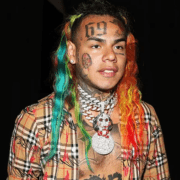
6ix9ine's Claims

6ix9ine Sparks Backlash After Ripping Off Wig on Camera: “It’s My Hair—Y’all Just Mad”

6IX9INE

MIAMI, FLORIDA – MAY 27: Tekashi 6ix9ine hosts the Memorial Day Weekend Kickoff at MAD CLUB Wynwood on May 27, 2021 in Miami, Florida. (Photo by Johnny Nunez/Getty Images)

Rapper 6ix9ine is back in viral form—this time, not for music or drama, but for hair. In a clip that exploded across social media, the rapper literally snatched off his own wig on camera, using the moment to clap back at critics accusing him of wearing fake hair, while mocking women’s natural hair routines in the process.

The result? A trademark 6ix9ine spectacle—equal parts chaos, trolling, and cultural controversy.


🎭 “This Hair Is Mine” — The Wig Comes Off

The clip begins with 6ix9ine staring into the camera, visibly irritated. He pulls at his head, parts his hair, and begins ranting about what he says are false rumors that he wears wigs to maintain his colorful image.

“The hair’s real,” he insists, before ripping off the attached unit. “The wig? That’s just for style—y’all do it ‘cause you have to. I do it ‘cause I want to.”

He blames the visible redness on his scalp on wig glue irritation, saying the glued pieces are purely aesthetic.

“Y’all put oils, eggs, and avocado in your hair like you making guacamole. Me? I just wake up with it.”

That line—mocking home hair-care remedies—set the tone for what quickly became one of his most controversial rants yet.


💬 Mocking Hair Routines and Protective Styles

After the dramatic wig reveal, 6ix9ine’s energy shifts from defensive to outright confrontational. He laughs at women who rely on sew-ins, wigs, teas, and DIY growth oils, claiming they “do it because they have to.”

He doubles down:

“I ain’t promoting no oils, no tea, no growth serum. I don’t need none of that. That’s y’all problem.”

His tone mixes humor with contempt—mocking ingredients like coconut oil, eggs, and herbs often used in natural hair care routines. The message, he says, is simple: his hair is real, and the wig is an optional accessory.

But to many viewers, the delivery felt less like self-defense and more like disrespect.


⚡ Online Reactions: “This Ain’t Funny—It’s Misogyny”

The clip immediately split the internet. Critics accused 6ix9ine of misogyny and cultural ignorance, saying he used a personal issue to demean women’s grooming choices—especially Black and Latina women, for whom hair care has deep cultural significance.

“This isn’t about hair—it’s about mocking women’s culture and self-care,” one user wrote.

“Protective styles aren’t insecurity—they’re preservation,” another posted.

Fans defended him, saying the rapper was simply clapping back at haters and staying true to his brand of chaotic trolling.

“That’s just 6ix9ine being 6ix9ine,” one fan said. “He always takes it over the top to get a reaction.”

Still, the backlash was widespread, with many arguing the rant reinforced harmful stereotypes about women’s hair and perpetuated long-standing beauty biases.


🧩 Deeper Than Hair: The Cultural Layer

While some dismissed it as another viral stunt, others saw it as a reminder of how hair remains a lightning rod for race, gender, and identity.

For many Black and Latina women, styles like wigs, braids, and sew-ins are not just fashion—they’re protective measures rooted in history, heritage, and health.

By framing them as “fake” or “desperate,” critics say 6ix9ine trivialized a cultural practice that’s already heavily scrutinized in both social and professional spaces.

“Hair is culture,” one TikTok creator said in response. “And when men—especially non-Black men—mock it for clout, it hits differently.”


📺 The Familiar Formula

For longtime followers, the moment fits a classic 6ix9ine pattern:

  • Visual shock (ripping off the wig)

  • Verbal provocation (mocking critics and hair routines)

  • Viral fallout (millions of views and arguments online)

It’s the same recipe that’s powered his brand for years—controversy as currency.

But this time, even some fans say he may have gone too far, turning a playful clapback into a divisive cultural flashpoint.


🚨 Bottom Line

6ix9ine says the hair is real and the wig is just for style — but the reveal quickly spiraled into a heated cultural debate about gender, image, and respect.

The internet’s divided: some see self-defense, others see mockery.

Either way, the message is clear — in 6ix9ine’s world, shock still sells, but the cost might be another layer of backlash.

“It’s not just hair,” one user wrote. “It’s identity. And when you make it a punchline, people are gonna push back.”

👉 For more livestream moments, visit The Urban Spotlight Homepage
20
Finesse

Finesse2Tymes Opens Up on Family Betrayal: “I Didn’t Lose My Brother to Violence — I Lost Him to Fear

Rapper Finesse2Tymes is finally breaking his silence on one of the most personal and painful chapters of his life — the fallout with his own brother, No Love, after a tense gun arrest that nearly landed both of them behind bars.

In a raw and emotional clip now circulating online, Finesse lays out the entire story — a night that started as an ordinary drive and ended with a broken bond, flashing police lights, and a gun that changed everything.


🚓 “It Was a Real Street Situation”

According to Finesse, the incident went down when he, his brother No Love, his child’s mother, and his young son were in the car together. Out of nowhere, police pulled them over.

“It was one of them real street situations,” Finesse said. “I’m in the car with my brother, my baby mama, and my son — and next thing you know, the lights come on behind us.”

What happened next was chaos. As the officers approached, a loaded gun was inside the vehicle — and, according to Finesse, that’s when his brother made a move that changed everything.

“He tried to slide the gun under the seat,” Finesse recalled. “When the police caught him doing it, they panicked — drew their weapons, surrounded the car. My baby mama screaming, my son crying. It could’ve gone bad real fast.”

The moment turned from tense to terrifying, and Finesse says the energy in the car shifted instantly from panic to disbelief.


💔 “He Looked Me in the Eye and Said, ‘I Ain’t Taking the Charge’”

Finesse says that once police discovered the weapon, they treated everyone inside as suspects. That’s when the situation, in his words, “cut deeper than any bullet ever could.”

“He looked me in the eye and said, ‘I’m not taking the charge,’” Finesse said quietly. “And that’s when I knew — it was over.”

The rapper said that moment destroyed years of trust and brotherhood.

“I told him straight up, ‘Don’t let me go to jail for your gun. You know it’s yours.’ But he couldn’t even stand on that.”


⚖️ Street Code & Responsibility

Finesse didn’t hold back when explaining what that moment represented to him — a violation of street code and manhood.

“If you bring a gun, you take responsibility for it. That’s protocol. That’s how we was raised,” he said. “You don’t put that on nobody else — especially not when there’s a woman and a kid in the car.”

To Finesse, the issue wasn’t just about legality — it was about principle.

“It wasn’t even about the police. It was about loyalty. You can’t call yourself street if you fold when it’s time to stand on your choices.”

He added that the moment forced him to see his brother differently:

“I realized he wasn’t built like that. He talk like a street dude, but that night showed me he wasn’t.”


🔫 “I’ve Done Time — But I’ve Always Owned Mine”

The Memphis rapper, who’s been open about his time behind bars, said the betrayal hit harder than any sentence.

“I’ve gone down for guns before,” he admitted. “But I go because I own it. Not because somebody else put me there.”

He described the pain of watching family loyalty crumble under pressure — not from violence or betrayal by outsiders, but from fear.

“You expect enemies to fold. You don’t expect your own blood to.”


🧠 Reflection: Loyalty, Fear, and Consequence

The story cuts deep into one of hip hop’s oldest themes — the line between real loyalty and real consequences.

Finesse’s message is simple but heavy: it’s easy to talk street until the lights flash and the heat’s real. That’s when character, not image, shows.

“I didn’t lose my brother to the streets,” he said. “I lost him to fear. And in my world, that’s worse than any enemy could’ve done.”


🚨 Bottom Line

Finesse2Tymes’ confession isn’t just another viral story — it’s a cautionary tale about family, trust, and accountability.

He says that one moment in the car revealed everything he needed to know — about brotherhood, about street code, and about who would truly stand beside him when it mattered.

In his own words:

“You can survive enemies. You can’t survive betrayal.”

👉 For more livestream moments, visit The Urban Spotlight Homepage

23
DJ

DL Hughley Puts DJ Vlad on the Spot: “So… What Are You Now—and Why Haven’t You Been Canceled?

DJ VLAD

Comedian and cultural commentator DL Hughley didn’t hold back in his latest sit-down with DJ Vlad, pressing him on identity, ethics, and the secret behind his decade-plus survival in a cancel-happy industry.

The result? A surprisingly introspective conversation that revealed why the man once known for mixtapes is now running one of the most enduring and controversial platforms in hip hop media.


👤 From “DJ Vlad” to Just Vlad

DL kicked off with what everyone’s been wondering: “You ain’t spun a record in years—so what is DJ Vlad now?”

Vlad laughed, admitting the “DJ” tag is legacy. He hasn’t touched turntables since the late 2000s.

“I stopped DJing around 2008. That’s when I went all-in on YouTube,” Vlad explained. “Mixtapes were done, DVDs were done—I saw where things were going and bet everything on digital.”

That early gamble paid off. While others clung to radio spots and print magazines, Vlad carved out a new lane — long before the podcast boom — building VladTV into a must-watch for unfiltered, archival-style hip hop interviews.

“At this point, I’m not a DJ. I’m a journalist, a producer, and a storyteller,” he said. “But ‘DJ Vlad’ stuck—and that’s fine. It’s history.”

DJ


🕰️ The “60 Minutes of Hip Hop”

DL framed Vlad’s empire as “hip hop’s 60 Minutes” — and Vlad didn’t disagree.

Unlike quick-hit radio promos, Vlad’s interviews dig deep: origin stories, career collapses, criminal cases, regrets, and redemption arcs. The result is content that feels equal parts documentary and confessional.

That same transparency, though, has drawn fire. Critics have called him “the feds,” accusing him of platforming sensitive topics for clicks. Vlad shrugged it off:

“I ask real questions, but I don’t trick people,” he said. “No hidden mics. No off-the-record leaks. If you say something, it’s because you wanted to.”

Love him or hate him, the format works — millions of subscribers, hundreds of viral clips, and a reputation for precision and control in a chaotic media landscape.


🏁 Why “Cancel Vlad” Never Sticks

DL asked the tough one next: “Why haven’t you been canceled? You’ve been called every name in the book.”

Vlad’s answer was simple — structure beats outrage.

He listed his principles like a checklist:

  • No ambushes: Everything is consent-based and on the record.

  • No hidden audio: “You won’t catch a leak from me,” he said.

  • No unpaid guests: “If a guest charges, we pay. Nobody leaves here saying VladTV owes them a dime.”

  • No edits out of context: Guests review what’s agreed upon.

“In a space full of shady deals and ego drama, I’m predictable,” Vlad said. “People may not love me, but they trust the system.”

That predictability, he argues, is what keeps guests returning — even those who once criticized him.

“Half the people who said they’d never do Vlad again eventually come back. Why? Because it’s clean business.”


🔒 Trust by Process, Not Personality

Vlad explained that his brand isn’t built on charm — it’s built on contracts, consistency, and clarity.

“I don’t do vibes. I do agreements. Guests know exactly what to expect,” he said. “That’s what creates trust — not friendship.”

That approach has helped him weather every controversy from Boosie’s rants to 6ix9ine’s viral confessions, maintaining viewership while others fade after one viral moment.


📺 Staying Power: First Mover, Still Moving

When others pivoted to short-form trends, Vlad doubled down on long-form documentation — a move he says separates “creators” from “reporters.”

“I was here before the podcast wave. I’m not competing for laughs or hot takes,” he told DL. “I’m building an archive — the real history of hip hop from the people who lived it.”

By treating YouTube like network television — scheduling drops, managing staff, keeping turnaround tight — Vlad outpaced younger platforms that chased clicks but lacked systems.


⚖️ DL’s Final Read: “You Built a Machine”

DL concluded the exchange with a rare compliment:

“People think you’re Teflon, but it’s really structure. You built a machine. It’s not about personality — it’s about process.”

Vlad agreed, emphasizing that his staying power comes from discipline, not drama.

“I don’t move emotional,” he said. “If something doesn’t work, I fix the system — not my feelings.”


🚨 Bottom Line

DL Hughley’s interview pulled back the curtain on how DJ Vlad survived an era that cancels everyone.

He’s not immune — he’s methodical.
He’s not untouchable — he’s accountable.

By ditching chaos for clarity, Vlad turned consistency into currency and built a lane where controversy fuels curiosity — not collapse.

In an industry obsessed with virality, Vlad’s superpower is simple:

“You can’t cancel what’s built on structure.”

👉 For morelivestream moments, visit The Urban Spotlight Homepage

34
Bad Bunny

Earthquake Checks DJ Vlad Over His Bad Bunny Super Bowl Take: “It Ain’t All About Y’all”

Bad Bunny

A heated cultural debate just broke out on air — comedian Earthquake checked DJ Vlad over his viral take on Bad Bunny headlining the Super Bowl halftime show, after Vlad questioned whether an all-Spanish set belonged on “America’s biggest stage.”

What followed was a masterclass in perspective — business, culture, and representation colliding — with Earthquake delivering one of the sharpest clapbacks of 2025.


🎤 Vlad’s Take: “I Don’t Understand the Lyrics”

In a recent discussion, DJ Vlad doubled down on his now-infamous tweet:

“I respect Bad Bunny’s music, but I don’t understand it. The Super Bowl’s 85% English-speaking — why make the biggest stage something most can’t follow?”

Vlad clarified he wasn’t hating, just “asking the question.” As a longtime DJ, he said he prefers songs he can connect with lyrically, arguing that Bad Bunny — whose catalog is almost entirely in Spanish — might be a better fit for global events like the World Cup or World Baseball Classic, where multilingual lineups are the norm.

“If Mexico’s top soccer league held their championship, would they book a U.S. rapper performing in English?” Vlad asked. “Probably not.”

To him, it wasn’t about exclusion — it was about fit and comprehension.


💼 Earthquake’s Response: “It Ain’t All About Y’all”

Enter Earthquake, who immediately flipped the conversation from taste to business reality.

“Bruh, this ain’t about your playlist — it’s about profit. The NFL don’t care who’s humming along. They care who’s watching.”

He framed it like a CEO breaking down strategy. The Super Bowl halftime show, he said, isn’t for one language group — it’s a global marketing engine.

“The NFL is capitalism at its highest level. You put the biggest Latin artist on the biggest American stage — that’s expansion. That’s smart. It ain’t all about y’all.”

He pointed out that the league’s long-term goal is growth — pulling in Latino households, younger audiences, and international viewers through streaming.

“You wanna grow the tent? You let everybody eat,” Earthquake said. “If you can’t understand it, turn on captions and enjoy the rhythm. You’ll be vibin’ just fine with my Latino friends.”


📺 History Lesson: How Halftime Became the Main Event

Earthquake even brought receipts. He reminded Vlad that the Super Bowl halftime show used to be a throwaway segment — marching bands, filler acts, low viewership.

Then in the early ‘90s, In Living Color aired a live sketch during halftime — and beat the NFL’s ratings. The next year, the league responded by booking Michael Jackson — changing halftime forever.

“They’ve been chasing global moments ever since,” Earthquake said. “That’s why you got Beyoncé, Shakira, Rihanna, The Weeknd — and now Bad Bunny. It’s evolution, not exclusion.”

Translation: The NFL’s always been willing to pivot if it grows their reach.


🌎 Vlad’s Counter — and Where They Found Middle Ground

Vlad pushed back respectfully, noting that football isn’t globally accessible like soccer.

“Pads, helmets, stadiums — the game itself ain’t international,” he argued. “So putting a global artist on that stage can feel out of sync.”

He admitted he understood the business move, but maintained that music is about connection — and connection, to him, comes through understanding lyrics.

Earthquake countered with empathy but stood firm:

“You’re talking from comfort. There’s millions who never see their language represented on that stage. Let ‘em have that moment.”

Their rare point of agreement? Accessibility. Vlad said if the NFL includes English hooks, captions, or collabs, everyone wins. Earthquake agreed — but made it clear: the default can’t always be English.


⚡ Why It Struck a Nerve

The exchange blew up online because it went beyond Bad Bunny — it was really about who the Super Bowl is for in 2025.

America’s population is shifting, streaming is borderless, and the NFL knows its next decade of growth lies outside traditional demographics.

Booking Bad Bunny isn’t just a music choice — it’s a market signal.

“The Super Bowl used to be for America,” one fan wrote. “Now it’s for the world.”


💬 Social Media Split

Supporters:

“This is business and representation. Let Latinos see themselves on the biggest stage.”

Skeptics:

“If most can’t understand the words, it’s alienating. Keep the Super Bowl lineup relatable to its base.”

Middle Ground:

“Add features, drop bilingual hooks, and put captions up. Boom — inclusivity solved.”

The debate shows just how divided fans are between tradition vs. transition — and how the NFL is trying to straddle both.


🚨 Bottom Line

Vlad wants lyrical understanding.
Earthquake wants cultural expansion.
The NFL wants both — ratings now and reach tomorrow.

Bad Bunny’s halftime isn’t just about who can sing along — it’s about who finally gets seen.

“It ain’t all about y’all,” Earthquake reminded. “This time, it’s about everybody.”

👉 For morelivestream moments, visit The Urban Spotlight Homepage

24
Young-Thug

YFN Lucci Speaks on Young Thug and Gunna — “He Owes Thug an Explanation

Young

In one of the most honest interviews to surface this year, YFN Lucci sat down with Cam Newton and spoke candidly about the complicated relationship between Young Thug and Gunna — two Atlanta rap heavyweights whose bond, loyalty, and legal entanglements have kept fans debating for months.

Lucci didn’t pick sides. Instead, he spoke from a place of empathy, maturity, and street understanding — saying that no matter what the headlines say, Gunna owes Thug a personal, face-to-face explanation.


💬 “He Gotta Speak About It”

Right out the gate, Lucci didn’t dance around the question.

“I do feel like he should speak about it. People want to know his side. They want to know how he feels.”

He wasn’t talking about public statements or social media PR moves. What he meant was much deeper — a man-to-man conversation that goes beyond viral soundbites.

“Even if you don’t get on live or talk online, at least hit that man’s phone. You owe him that conversation.”

Lucci said silence, especially between brothers who once moved as one, creates a wound that only communication can heal.

“You can’t just stay quiet and expect time to fix it. Sometimes, the only thing that fixes it is honesty.”


🤝 “You Owe Him Because That’s Your Brother”

The moment hit harder when Lucci shifted from the public feud to the personal bond.

“That’s your man. Y’all done been through real stuff together. You owe that man an explanation — ‘cause he loved you. Y’all loved each other.”

He wasn’t defending street politics — he was defending loyalty and closure.
Lucci explained that real friendship doesn’t vanish under pressure, even when things get messy.

“If I was the one locked up for life, and you ain’t say nothing to me? That’d hurt. You ain’t gotta say it in public — but tell me how you feel.”

For Lucci, the code of loyalty isn’t about image or ego; it’s about human connection — about having the decency to explain yourself to the people who once had your back when nobody else did.


💭 “I Don’t Think He Just Told — But He Kinda Threw Him Under the Bus”

When Cam Newton pressed further — asking if Lucci believes Gunna “snitched” — the rapper offered one of the most nuanced answers anyone has given on the topic so far.

“I don’t actually look at it like he just told on the n***a… but you kinda threw him under the bus. You feel me?”

He clarified that Gunna’s situation wasn’t black-and-white, especially with claims that he was “tricked” during statements. But Lucci said that even if that’s true, accountability still matters.

“Even if that’s true, you still owe Thug a call. You owe that man clarity, ‘cause that’s family.”

To Lucci, intent doesn’t erase impact. Whether it was a misunderstanding or manipulation, Gunna’s silence only deepens the divide — and the pain.


🗣️ “We Gotta Talk About This”

Lucci stressed that real men handle things directly, even when it’s uncomfortable.

“We gotta talk about this. You can’t just leave it hanging in the air like that. Even if it’s awkward — that’s your brother. Handle it like one.”

He painted a vivid picture of what it must feel like to be Thug right now:

“What if that was me locked up for life and I never got to see my kids again over this? How would you feel then?”

That line wasn’t about blame — it was about empathy. Lucci reminded the world that behind all the music, fame, and court documents, there are real people living with the emotional aftermath of these choices.


❤️ A Message About Loyalty and Healing

As the conversation wrapped, Lucci’s tone softened. This wasn’t a diss or a shot — it was an appeal to the values that built Atlanta’s rap culture in the first place: loyalty, brotherhood, and truth.

“You don’t just go quiet when the bond was real. You pick up the phone, you explain, and you stand on what you did. ‘Cause at the end of the day, that’s your brother.”

To Lucci, forgiveness starts with communication. Even if bridges can’t be rebuilt, honesty is still owed.

“You owe him that.”


🕊️ Bottom Line

YFN Lucci’s comments cut through the noise surrounding Young Thug and Gunna’s fallout. He’s not labeling, judging, or picking sides — he’s calling for something rarer in today’s culture: accountability through compassion.

At its heart, his message is simple but powerful:
When loyalty is real, silence is betrayal.
When brotherhood breaks, closure begins with conversation.

💬 Final Takeaway:
YFN Lucci says he understands both Young Thug’s pain and Gunna’s position — but real respect requires real dialogue.
You don’t need cameras or clout to make things right. Sometimes, all it takes is one phone call and three words:
“Let’s talk, bro.”

👉 For more trending hip-hop news and viral artist moments, visit The Urban Spotlight Homepage

34

Gucci Mane Opens Up About Forgiving Young Thug’s Public Apology


Gucci

In an era where most rap headlines center on beefs, diss tracks, and digital shade, Gucci Mane just offered something completely different — grace.
During a recent conversation, the Atlanta legend reflected on why he immediately forgave Young Thug after hearing the younger artist’s public apology, explaining that he saw himself in Thug’s struggle.

“Let’s say for instance, like Thug said some stuff about me, right? And it came on the internet. But then he made a song and said, ‘I miss my dawg,’ about me. I immediately accepted the apology — because I been there.”

Those words weren’t rehearsed or polished; they came from a man who has learned what it means to fall, rebuild, and mature in front of the entire world.


💬 “I Immediately Accepted His Apology”

Gucci explained that when he first heard Thug’s name-drop in a track that sounded like a peace offering, his instinct wasn’t skepticism — it was empathy.

“I know how that feels,” he said quietly. “It’s like a weight on you — you just want somebody to say, bro, it’s okay.”

For Gucci, forgiveness wasn’t about image or optics; it was about relating.
He remembers the exact emotions that come with regret — wanting to repair a bridge but fearing the other side won’t listen. That recognition made the apology feel genuine, and his response, instant.


💭 “I Was Going Through an Episode Too”

Gucci’s ability to extend grace comes from having once needed it himself.
He admitted that in earlier chapters of his career, when personal issues and public pressure collided, he lashed out at people who didn’t deserve it.

“I said some crazy junk about Durk, said some wild stuff about Drake. But I was going through an episode. Later, I hit them up like, ‘I’m sorry about that.’

Those conversations, he said, were humbling. Some ignored him. Others forgave. But what mattered most was that he tried.

“Some folks didn’t want to hear it. But a lot of people said, ‘We gonna get past that. It ain’t no big deal.’ That felt good, ‘cause I know I’ve hurt people too.”

That experience reshaped how he views other artists’ mistakes. When Thug reached out publicly, Gucci recognized that same vulnerable step — and chose to respond with understanding rather than pride.


🤝 “Brothers Go Through Stuff”

Gucci’s tone turned reflective when talking about the meaning behind Thug’s apology.

“It felt good to see people see past it, ‘cause brothers go through stuff. When he said sorry, I felt that.”

He acknowledged that forgiveness doesn’t come easy — especially in an industry built on ego and competition. But for him, the gesture hit differently.

“I probably wouldn’t have forgave somebody if they did me like that. So when people forgive me, that mean something. It made me realize how powerful grace really is.”

That statement turned a private reconciliation into a public lesson. In a culture that often equates forgiveness with weakness, Gucci framed it as a sign of evolution.


🧊 Full-Circle Growth

For Gucci, this moment wasn’t about aligning with anyone politically or musically — it was about spiritual maturity.

“I know what it’s like to be going through something, to be misunderstood. When I saw Thug say ‘I miss my dawg,’ I ain’t think twice. I accepted that.”

It’s a stark contrast to the fiery Gucci of a decade ago — the man who once answered disrespect with diss tracks and defiance. Now, he sees power in restraint, in knowing that not every shot needs a response and not every rift needs revenge.

He closed his thoughts with quiet wisdom:

“You never know what somebody’s fighting inside. Sometimes, you just gotta let it go.”


🕊️ Why It Matters

The Gucci-Thug exchange is more than a moment between two Atlanta icons — it’s a snapshot of what maturity looks like in hip-hop’s current generation.
Both men have faced immense personal battles: legal cases, public scrutiny, loss, and isolation. Their ability to publicly model forgiveness sends a message that’s rare in today’s clout-driven cycle — that growth doesn’t require perfection, just honesty.

Gucci’s reflection also dismantles one of rap’s biggest myths: that strength is measured by retaliation. Instead, he’s redefining it through accountability, empathy, and emotional intelligence.

“You never lose by showing love,” one fan commented under the clip. “This is real man energy, not rapper ego.”

Online, the reaction mirrored that sentiment. Some called it “grown-man Gucci.” Others said it felt like watching the genre heal in real time.


🚨 Bottom Line

Gucci Mane says he forgave Young Thug — not because it looked good, but because he recognized the pain behind the apology.
Having once been the man seeking forgiveness himself, he understood that extending it is how cycles of hate finally break.

💬 Final Takeaway:
Forgiveness isn’t weakness; it’s wisdom earned through experience.
Gucci Mane’s message is simple: real kings don’t hold grudges — they give grace, grow from mistakes, and keep building bridges where others burn them.

👉 For more trending hip-hop news and viral artist moments, visit The Urban Spotlight Homepage


Ice Spice Responds After Fans Accuse Her of Buying Fake Views for “Baddie Baddie” Music Video

Ice Spice

🚨 The internet went into meltdown this morning after fans noticed that Ice Spice’s new “Baddie Baddie” music video shot up millions of views within minutes of release — sparking wild claims that her team was buying fake views.

But in classic Ice Spice fashion, the Bronx rapper shut it all down with one viral tweet that flipped the entire narrative.


💬 “Somebody Thought They Ate Buying Views for Me 😂”

Ice Spice wasted no time addressing the rumor directly. Taking to X (Twitter), she posted a single slick line that sent social media spinning:

“somebody thought they ate buying views for me 😂… bby it’s chess, not checkers🫡”

That tweet instantly took over timelines. Fans praised her calm confidence, while meme accounts had a field day remixing the “chess, not checkers” quote into everything from reaction GIFs to fake Nike ads.

She didn’t name names — but the tone said it all. Somebody tried to play her, and she let them know she’s five moves ahead.


🎬 The Suspicious Spike in Numbers

The chaos started just 15 minutes after “Baddie Baddie” dropped. Fans began noticing that:

  • The video jumped from 200K to 3 million views in under 20 minutes.

  • Comments and likes didn’t match the view count.

  • YouTube appeared to freeze the counter, a common sign when automated traffic is detected.

Trolls immediately accused Ice Spice of buying views to inflate her numbers — but her fanbase, known for moving like a digital army, came to her defense instantly.

“Nah, Ice Spice doesn’t gotta buy views — the girls and the gays click faster than bots,” one fan joked.

Within hours, the situation turned from accusation to meme-fest — and Ice Spice walked away untouched.


🧠 “It’s Chess, Not Checkers” — The Subtweet Heard Around the World

That now-iconic line — “It’s chess, not checkers” — quickly became the internet’s favorite new slogan.

It wasn’t just shade; it was strategy. Ice Spice has built her entire career off precision — dropping viral singles, securing top-tier collaborations, and staying unbothered in chaos.

“She’s saying, y’all tried to frame me, but I’m five steps ahead,” one fan wrote.
“That’s a boss move.”

Many even believe the tweet was aimed at rival camps — or possibly at whoever tried to boost her views artificially to make her look guilty.

Either way, she flipped a potential PR crisis into a branding win.


👑 Ice Spice’s Real Numbers Speak for Themselves

Let’s be real — Ice Spice doesn’t need fake views. Her stats are already chart-certified:

  • Deli” surpassed 100 million YouTube views.

  • Her collaboration with Taylor Swift, “Karma (Remix),” debuted in the Billboard Top 10.

  • Every single drop she posts becomes a TikTok trend within hours.

As one fan perfectly summed it up:

“Her views are real because her reach is real. If she breathes, it trends.”

In a world full of streaming manipulation, Ice Spice’s influence has proven to be authentic — and global.


⚡ The Internet Reacts

Social media had a field day once her tweet dropped:

😂 “Bots can’t even keep up with Ice Spice’s algorithm.”
♟️ “Chess, not checkers might be the quote of the year.”
🔥 “Somebody tried to set her up and failed miserably.”

TikTok creators are already turning the line into soundbites for skits, while rival fanbases are busy doing damage control.

Even a few industry insiders hinted that the sudden spike may have been a smear attempt by competitors hoping to stir controversy.


🚨 Bottom Line

Ice Spice has officially denied any involvement in fake view-buying for her “Baddie Baddie” video — and she did it with humor, confidence, and strategy.

By tweeting “It’s chess, not checkers,” she turned what could’ve been a messy headline into a viral flex.

💬 Final Takeaway:
In a digital era where bots and smear tactics run rampant, Ice Spice stays undefeated.
One tweet, one emoji, and she reminded everyone that her fame isn’t artificial — it’s algorithmic.

Whether it’s streams, style, or strategy — Ice Spice plays the long game. 🧊♟️


👉 For more trending hip-hop news and viral artist moments, visit The Urban Spotlight Homepage
👉 Read Ice Spice’s full artist bio on Wikipedia

23

NBA YoungBoy Performs “I Hate YoungBoy” Live for the First Time in Atlanta

YoungBoy

🚨 Atlanta just witnessed a cultural earthquake.
For the first time ever, NBA YoungBoy performed his explosive diss record “I Hate YoungBoy” live — and the moment instantly became one of the most electrifying performances hip-hop has seen in years.

The energy inside the venue was unfiltered chaos — thousands of fans screaming every word, lights flashing, and chants of “YB Better” echoing through the arena like a rally cry.

What started as one of rap’s most controversial records has now become a symbol of dominance, freedom, and full-circle redemption.


🎤 The First-Ever Live Performance

“I Hate YoungBoy” has long been a legendary record in modern rap — a scorched-earth anthem where YoungBoy took aim at Lil Durk, OTF, industry figures, and even media personalities.

Despite its massive popularity, the song had never been performed live — until this Atlanta show.

When the opening beat dropped, the entire arena erupted before a single lyric was rapped.
Phones went up, flashlights lit the crowd, and within seconds, thousands were yelling the words in unison — turning a diss record into a victory anthem.

“That wasn’t just a performance,” one attendee said. “It was a declaration.”


🔥 “That Was His ‘Hit ’Em Up’ Moment”

Fans online didn’t hold back their comparisons — calling it YoungBoy’s version of Tupac’s “Hit ’Em Up” moment.

“Bro performed ‘I Hate YoungBoy’ like it was the national anthem,” one fan wrote.
“That was energy, pain, and power all in one.”

Even DJ Akademiks, who was in attendance, couldn’t hide his excitement:

“That was the most electric rap performance I’ve seen in years. Period.”

The crowd’s response — equal parts cathartic and chaotic — reflected the very spirit of the song: fearless, unfiltered, and loyal to the end.


🏙️ Atlanta Embraces the Moment

Performing this particular record in Atlanta made it even more significant.
It’s a city tied to several of YoungBoy’s former rivals, yet the reaction was pure love.

Fans ignored the politics and embraced the moment — proving that YoungBoy’s connection to his audience outweighs any industry division.

By the final verse, the crowd’s “YB Better!” chant was deafening, shaking the venue walls and flooding social media feeds.

“That wasn’t hate — that was history,” one fan wrote.


⚡ Full-Circle Energy: From Controversy to Celebration

The timing couldn’t have been more symbolic.
Just days after receiving the Key to the City of Atlanta, YoungBoy returned to perform the very record that once made him a lightning rod for controversy.

Now, that same track has become a rallying cry — not of division, but of triumph.

From house arrest in Utah to a stage packed with thousands, YoungBoy turned what was once viewed as defiance into a moment of unity.

“It wasn’t just a concert,” said one fan. “It felt like closure — like he finally won.”


💬 The Internet Reacts

As expected, social media went into overdrive:

🔥 “He performed a diss track like it was a Grammy song — legendary.”
💯 “YB got Atlanta screaming ‘I Hate YoungBoy.’ That’s poetic.”
👑 “That wasn’t a concert — that was a coronation.”

Within hours, the performance had racked up millions of views across TikTok, Twitter, and YouTube, with fans and critics alike calling it the biggest rap moment of 2025.


🚨 Bottom Line

NBA YoungBoy performed “I Hate YoungBoy” live for the first time ever in Atlanta, turning one of the most controversial diss tracks of this era into a unifying, career-defining moment.

The crowd’s energy transformed the performance from a grudge song into a statement of power — the culmination of years of criticism, comeback, and growth.

💬 Final Takeaway:
This wasn’t just another tour stop — it was a redemption concert.
A diss track that once divided the rap game became a chant of triumph and loyalty.
Love him or hate him — YB just proved he’s in a league of his own.


👉 For more hip-hop moments and live performance coverage, visit The Urban Spotlight Homepage
👉 Read NBA YoungBoy’s full artist bio on Wikipedia

59
NBAYoungboy

NBA YoungBoy Receives the Key to the City of Atlanta

YOUNGBOY

🚨 NBA YoungBoy just made history in one of the most unexpected full-circle moments hip-hop has seen — receiving the Key to the City of Atlanta for his cultural impact, growth, and emerging role in community outreach.

The Louisiana-born rapper — once known for courtroom headlines and lyrical intensity — stood humbled and soft-spoken as Atlanta officials and local leaders honored him with the symbolic key, marking a turning point from controversy to community.


🗝️ “We Appreciate Everything You’ve Done for the Community”

During the ceremony, one Atlanta commissioner delivered heartfelt words that summed up the moment:

“I want to thank you and let you know that we see you. We appreciate everything you’ve done for the community — and everything you’re about to be.”

Applause filled the room as YoungBoy accepted the plaque — a public acknowledgment of an artist whose name once sparked fear and debate, now standing as an example of redemption and responsibility.


🎤 From House Arrest to Hometown Hero Energy

For fans who’ve followed YoungBoy Never Broke Again’s rise, this moment hits differently.
Just two years ago, he was creating music under house arrest in Utah — cut off from the world, under federal supervision, recording verses in isolation.

Now, the same rapper once labeled “too raw for radio” is being honored for his message of growth, accountability, and peace.

Atlanta youth advocates credit his shift in message and his willingness to support youth mentorship and anti-violence efforts as key factors behind the honor.

“He’s using his voice differently now,” said one community organizer. “Kids who used to connect with the pain in his music are now hearing about growth, balance, and legacy.”


🕊️ On Ending Gun Violence

At one point in the ceremony, a city representative turned to YoungBoy and his team with a powerful question:

“How can we keep this energy going — how do we eliminate gun violence in our schools?”

YoungBoy’s reply was short, steady, and sincere:

“We’re going to figure it out together.”

That single sentence — humble but hopeful — instantly spread across social media, becoming one of the day’s most quoted lines. Fans are already calling it one of his most meaningful moments ever captured on camera.


💬 Fans React: “A Full-Circle Moment”

The internet immediately caught fire after news of the award broke.

On X (formerly Twitter):

🔥 “From Baton Rouge to Atlanta — that’s what growth looks like.”
💯 “Crazy to see the city that once banned certain artists now handing them keys.”
🕊️ “Love him or hate him, YoungBoy’s influence is unmatched.”

For many, it was deeper than the ceremony. It was proof that transformation is possible — that a young man who once embodied hip-hop’s most dangerous narratives is now helping rewrite them.


🏙️ The Bigger Picture

Receiving the Key to the City is about more than prestige — it’s a gesture of trust and a public acknowledgment of positive influence.

For NBA YoungBoy, it’s also a symbol of rebirth — from battling legal restrictions to becoming an emblem of responsibility and reform.

He now joins a short but iconic list of Atlanta rap figures — Ludacris, T.I., Jeezy, Killer Mike — who’ve been recognized for using their platforms beyond music.

“This isn’t about fame anymore,” one official said. “It’s about impact.”


🚨 Bottom Line

NBA YoungBoy has officially received the Key to the City of Atlanta, honored for his influence, mentorship, and contributions to the community.

City leaders praised his evolving message and commitment to helping reduce violence among youth.

💬 Final Takeaway:
What began as the story of a troubled artist has transformed into one of redemption and renewal.
With Atlanta’s key in hand, NBA YoungBoy isn’t just unlocking doors — he’s opening a new chapter for himself and the culture he helped define.


👉 For more stories on hip-hop culture and artist milestones, visit The Urban Spotlight Homepage
👉 Read NBA YoungBoy’s full biography on Wikipedia

Akademiks

DJ Akademiks Clarifies “Pray for Nicki Minaj” Tweet — Says Roc Nation Uses “Bullying Tactics” to Silence People

DJ Akademiks Steps in with Guidance for Sexyy Red Following S3x Tape Leak

🚨 DJ Akademiks just turned a cryptic tweet into a full-blown industry exposé. After his post — “Pray for Nicki Minaj. Roc Nation is devious.” — went viral, Ak jumped on stream to clarify what he really meant.

And no, it wasn’t about fandom or sympathy. According to him, it was a warning.

“I didn’t say pray for Nicki Minaj because I like her. I said it because Roc Nation is devious.”

The comment sent social media into overdrive — with some thinking he’d suddenly joined Team Nicki. But as Ak made clear, this wasn’t about picking sides.


🎙️ “I’m Not an Ally of Nicki Minaj”

Ak kicked off his livestream by setting boundaries:

“I’m not an ally of Minaj. I’m not a friend of Nicki Minaj. Me and Nicki don’t speak. I have no horse in the race.”

He said his message wasn’t about defending Nicki personally — it was about validating her warning regarding what she called “industry power plays.”

“What she’s alluding to about Roc Nation? I’ve seen the same disturbing patterns and trends.”


🕵🏽‍♂️ “They Use Bullying Tactics — I’ve Seen It”

Ak went further, accusing Roc Nation of using intimidation and influence to control narratives in the music industry.

According to him, the company has a history of:

  • Pressuring media voices through corporate or financial means

  • Leaking or fabricating accusations to ruin reputations

  • Using relationships and sponsorships to silence dissent

“They’ll bully you, throw money around, or suddenly somebody pops up with an accusation, a debt, or a reason to shut you down.”

He claimed these weren’t rumors — they were patterns he’s personally observed over time.


🧩 “I Could Name Five People Who Folded”

Ak said Nicki’s not the only one who’s felt that pressure.

“I could name you five people who had issues with Roc Nation — business, timing, whatever — and all of them threw in the white flag.”

He half-joked, half-admitted:

“Damn, I’m about ready to throw in the white flag too.”

His point: few people in media or music have the leverage to stand up once Roc Nation gets involved.


⚖️ Roc Nation’s Name in Legal Context

To back up his claims, Ak referenced what he said was a recent legal deposition tied to Megan Thee Stallion’s legal matters.

“In a deposition that was supposed to be about Megan’s case, somebody literally said, ‘Go tell Desiree Perez what Akademiks is saying.’”

Ak emphasized that Desiree Perez, Roc Nation’s CEO, wasn’t directly part of that case — suggesting what he called “interest beyond reason.”

To him, that’s proof of how deep the company’s network runs.

Nicki


🙏🏽 “Don’t Call Nicki Crazy”

Even while reminding viewers he’s not a fan, Ak defended Nicki Minaj’s right to speak freely about her experiences.

“I might not like Nicki Minaj, but let’s relax before calling her crazy when she talks about Roc Nation.”

He warned fans that if she continues to expose industry dealings, retaliation might follow.

“I wouldn’t be surprised if a few things start happening. I don’t even want to speak it into existence — but pray for her.”


🧠 What Sparked It: Nicki’s Cryptic Tweets

This all came after Nicki Minaj posted a series of cryptic tweets about “evil energy,” “industry setups,” and people “selling their souls for power.”
Ak’s tweet — “Pray for Nicki Minaj. Roc Nation is devious.” — exploded within hours, with fans debating whether he was mocking her or showing solidarity.

His clarification reframed it as genuine concern — and a veiled warning to others.


💬 The Bigger Message

At the heart of Ak’s rant is a serious accusation: that major management firms quietly influence media, lawsuits, and public narratives in ways the public rarely sees.

“Everyone isn’t saying these things for nothing,” he warned. “Some of us have seen too much.”

He cast his “pray for Nicki” tweet not as gossip, but as a public caution — a signal that even powerful artists can be targeted when they refuse to fall in line.


🚨 Bottom Line

DJ Akademiks says his “Pray for Nicki Minaj” post wasn’t about siding with her — it was about calling out what he calls Roc Nation’s intimidation game.
He claims he’s witnessed the tactics firsthand: bullying, manipulation, and quiet blacklisting.

And while he insists he’s no fan of Nicki, he believes her warnings deserve to be heard — not dismissed.

💬 Final Takeaway:
Ak’s message isn’t about celebrity beef — it’s about free speech in an industry built on silent power.
Whether you believe him or not, his tweet exposed one truth about modern hip-hop: sometimes the real battles aren’t on the charts — they’re behind the curtain.


👉 For more industry deep dives and livestream highlights, visit The Urban Spotlight Homepage
👉 For Nicki Minaj’s full career overview, see her Wikipedia page


23

DON’T MISS A BEAT

Be the first to know when our Urban Hotties is released.

We don’t spam! Read our privacy policy for more info.

© Copyright – 2021 The Urban Spotlight –  All Rights Reserved. Privacy Policy   Terms of Service | Find us On