
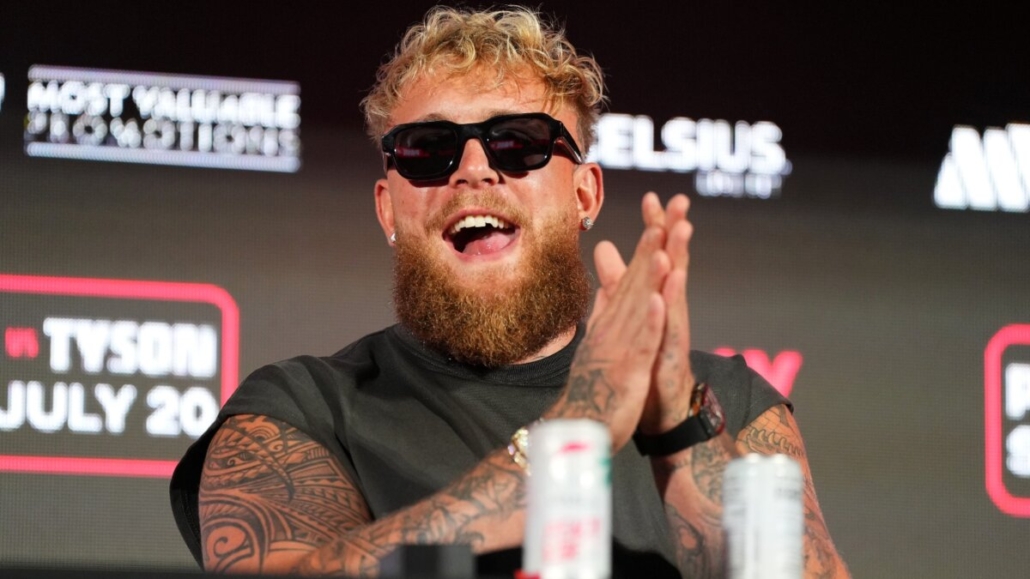
Jake Paul Sparks Super Bowl Firestorm After Blasting Bad Bunny 👀🔥
Super Bowl weekend thrives on spectacle, but this time the loudest moment didn’t come from the field or the halftime stage. It came from Jake Paul, who once again found a way to dominate the conversation without ever stepping onto the turf. In a set of comments that spread rapidly across social media, Jake said he planned to turn off the Super Bowl halftime show, directly calling out Bad Bunny in a way that instantly ignited backlash and debate.
What could have been dismissed as a simple opinion about music quickly escalated into something much bigger. Jake didn’t just criticize the performance or say it wasn’t for him — he questioned Bad Bunny’s identity and went as far as labeling him a “fake American citizen.” That single line transformed a halftime critique into a full-blown cultural and political flashpoint.
How Jake Turned a Halftime Opinion Into a Firestorm
Jake’s comments landed hard because of timing and tone. Super Bowl halftime shows are already cultural battlegrounds, with millions watching and opinions flying from every direction. By inserting himself so forcefully, Jake ensured his take wouldn’t get lost in the noise.
The statement spread fast. Clips and screenshots circulated across platforms, and within hours, the focus had shifted away from football and toward the controversy. Some fans backed Jake’s right to express his opinion, framing it as free speech and personal taste. Others argued that he crossed a clear line by attacking identity rather than performance.
Why the Bad Bunny Comment Hit a Nerve
The backlash intensified when people pointed out a basic but critical fact: Puerto Ricans are American citizens. That clarification turned the conversation from a music debate into a lesson on history, citizenship, and respect. Many felt Jake’s comment wasn’t just uninformed, but dismissive of Puerto Rican identity and culture.
Supporters of Bad Bunny emphasized his global influence, cultural impact, and role in representing Latin music on one of the world’s biggest stages. For them, the criticism felt less like commentary and more like erasure. As the debate grew, the halftime show itself became secondary to the larger issue of representation.
Fans Pick Sides as the Internet Explodes
Social media reactions were immediate and divided. Some defended Jake, saying he was intentionally provocative and exercising his right to speak freely. They argued that not liking a performer — even loudly — shouldn’t be treated as a crime.
Others strongly disagreed, accusing Jake of clout-chasing and deliberately stirring controversy during one of the most-watched events of the year. Many felt the comment revealed a lack of understanding about Puerto Rican citizenship and culture, making the moment feel careless rather than bold.
Regardless of where people landed, one thing was undeniable: the conversation was no longer about football.
Jake and the Pattern of Viral Provocation
This moment fits a familiar pattern. Jake has built much of his public presence on disruption — saying the thing that guarantees attention, backlash, and engagement. From YouTube stunts to boxing rivalries to cultural commentary, he understands how to insert himself into trending moments and redirect the spotlight.
Using the keyword Jake here matters because his brand is inseparable from controversy. Whether people see him as fearless or reckless often depends on personal values, but his ability to hijack conversations is undeniable.
Why This Became Bigger Than Music
What gave this situation extra weight is the platform involved. The Super Bowl halftime show isn’t just entertainment — it’s a global stage. Performers represent culture, identity, and visibility as much as music. When Jake questioned Bad Bunny’s place on that stage, it touched nerves far beyond fandom.
The debate quickly expanded into discussions about who gets to represent America, whose culture is valued, and how celebrity voices influence public perception. In that sense, Jake’s comment became a catalyst for conversations that were already simmering beneath the surface.
Bad Bunny’s Silence and the Internet’s Response
Notably, Bad Bunny did not respond directly to Jake’s comments. That silence didn’t slow the discourse — it intensified it. Fans, critics, and commentators filled the gap, dissecting intent, impact, and accountability.
Some argued that ignoring the comment was the most powerful response. Others felt it placed even more responsibility on the public to push back against misinformation. Either way, the absence of a direct reply kept the focus squarely on Jake’s words and their fallout.
Free Speech or Clout-Chasing?
At the heart of the debate is a familiar question. Was this free speech, or was it calculated provocation? Supporters say Jake simply voiced an opinion and sparked discussion. Critics argue he knowingly crossed cultural lines to stay relevant during a massive event.
The truth likely sits somewhere in between. Jake understands virality, and Super Bowl weekend is the biggest stage possible without performing. By commenting the way he did, he guaranteed attention — and he got it.
Final Thoughts: Jake Strikes Again
Love him or hate him, Jake once again proved he knows exactly how to dominate a headline cycle. With a few words, he shifted focus from the game to himself, pulling music, culture, and identity into one explosive moment.
This wasn’t just a halftime critique — it was a reminder of how powerful celebrity commentary can be, especially during global events. Whether people saw it as free speech or pure clout-chasing, the result was the same: Jake Paul hijacked the Super Bowl conversation without ever stepping on the field.
And as history has shown, when Jake enters the discourse, silence is never an option.
👉 Stay connected with the latest updates on this story and more hip-hop news at The Urban Spotlight Homepage.


Leave a Reply
Want to join the discussion?Feel free to contribute!