
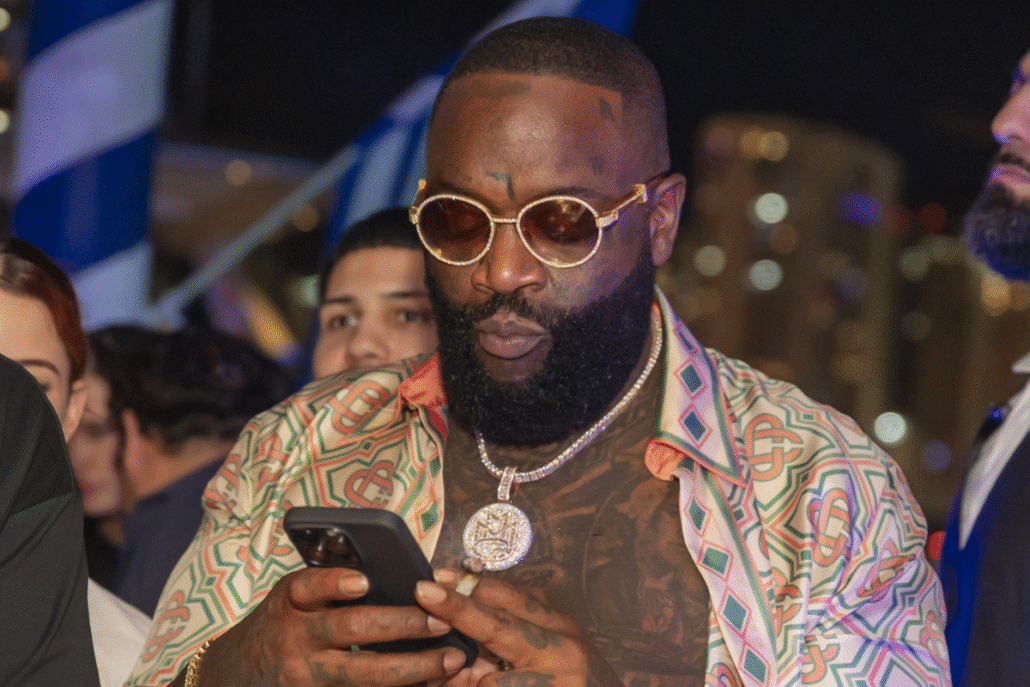
Rick Ross Praises T.I.’s New Track Amid 50 Cent Drama — “That’s Fire!”
Hip-hop conversations rarely stay quiet for long, especially when respected artists publicly support one another during moments of tension. That’s exactly what happened when Rick Ross gave a strong co-sign to T.I.’s latest track, calling it “fire” while discussions involving 50 Cent continued to circulate online.
The shoutout immediately caught attention because fans saw it as more than just praise for music — many viewed it as a statement, especially given the ongoing discussions and history between major personalities in the hip-hop space. Social media quickly turned the moment into a talking point, with supporters and critics debating whether the co-sign added fuel to existing narratives or simply reflected respect between artists.
At the same time, Rick Ross shifted focus toward his upcoming car show, reminding audiences that business and big events continue moving forward regardless of online drama. That balance between music, public conversation, and personal brand moves is what kept fans engaged.
This full blog breaks down the viral reaction, why the co-sign gained attention, and how support between artists can quickly become part of larger hip-hop discussions.
The Co-Sign That Sparked Conversation
The moment started when Rick Ross publicly praised T.I.’s new track, calling it fire and showing clear appreciation for the music. In the world of hip-hop, endorsements from respected artists carry weight — especially when relationships between artists can influence fan conversations.
The shoutout was short but powerful. Fans immediately began analyzing:
-
Why Ross chose this moment to speak up
-
Whether the support carried deeper meaning
-
How it connected to ongoing online debates
Within hours, clips and posts discussing the co-sign spread widely.
Why the Timing Felt Important
In music culture, timing often shapes how messages are interpreted. Because conversations involving 50 Cent were already active online, some fans viewed Rick Ross’s praise as a strategic or symbolic moment.
Others argued it was simply genuine appreciation for good music.
This difference in interpretation created two main narratives:
-
A pure musical co-sign between artists
-
A subtle statement inside larger industry dynamics
Either way, the timing helped the moment gain momentum.
Rick Ross and Public Support in Hip-Hop
Rick Ross has long been known for openly supporting artists and collaborating across the industry. His endorsements often highlight respect for creativity rather than competition.
Fans noted that the shoutout felt consistent with his reputation for:
-
Recognizing strong music
-
Celebrating successful releases
-
Maintaining confidence in public statements
Because of that, many supporters saw the moment as natural rather than controversial.
Social Media Reacts Instantly
As soon as the co-sign went public, social media exploded with reactions.
Supporters said:
-
Ross was showing real respect for music
-
Hip-hop needs more public support between artists
-
The energy felt positive despite surrounding drama
Critics argued:
-
The timing could intensify existing tensions
-
Public endorsements can be interpreted politically
-
Fans often read deeper meanings into simple comments
This divide kept the conversation trending.
The Role of 50 Cent in the Discussion
Although the focus started on music, mentions of 50 Cent quickly entered fan conversations because of ongoing industry dynamics. While no direct confrontation occurred in this moment, online audiences naturally connected the dots and speculated about relationships within the hip-hop landscape.
This highlights how:
-
Fans often create narratives beyond the original statement
-
Social media amplifies speculation
-
Past history influences interpretation
The involvement of major personalities made the conversation bigger than a simple music review.
Shifting Focus to Business Moves
After the musical co-sign gained attention, Rick Ross shifted the conversation toward his upcoming car show — a move many fans described as smart and strategic.
By doing so, he reminded audiences:
-
He balances music with business ventures
-
Big projects continue regardless of online chatter
-
The focus stays on growth and events
This shift helped redirect energy from debate toward anticipation.
Why Rick Ross’s Brand Stays Strong
Part of what makes Rick Ross’s public image effective is consistency. Whether discussing music or business, he often emphasizes success, growth, and confidence.
This approach includes:
-
Entrepreneurial projects
-
Large-scale events
-
Lifestyle branding
Fans often respond positively because the message remains clear: keep moving forward.
Music Co-Signs and Their Impact
In hip-hop, public support can influence how audiences view new music. When a respected artist praises a track, it can drive more attention and credibility.
Benefits of co-signs include:
-
Increased curiosity from listeners
-
Wider discussion online
-
Additional media attention
T.I.’s track naturally received more spotlight after the shoutout.
The Power of Artist Relationships
Hip-hop culture has always been shaped by relationships between artists — collaborations, rivalries, and mutual respect all play roles in shaping conversations.
Public support moments like this remind fans that:
-
Not every headline is conflict-driven
-
Respect can coexist alongside competition
-
Music remains the central focus
This perspective appealed to fans tired of constant drama narratives.
Fans Debate Intent vs Reality
As often happens online, audiences debated whether the shoutout carried deeper meaning or was simply appreciation.
Some believed:
-
The message was purely about music quality
Others thought:
-
Timing suggested a subtle statement
This debate kept the topic alive for days.
The Intersection of Music and Promotion
Another layer to the story involves promotion. In today’s digital landscape, even short comments can function as marketing moments.
The co-sign achieved several things:
-
Highlighted T.I.’s track
-
Kept Rick Ross trending
-
Added excitement around upcoming events
This shows how modern hip-hop conversations blend creativity and strategy.
Why the Internet Loves Moments Like This
Fans are drawn to interactions between established artists because they often hint at larger industry stories.
Elements that drove engagement:
-
Recognizable names
-
Existing fan loyalties
-
Open-ended interpretation
When viewers feel they’re witnessing part of a bigger narrative, engagement naturally rises.
Rick Ross and the “Boss Mentality”
Throughout the conversation, many fans pointed out that Rick Ross’s approach reflected his “boss mentality” branding — supporting music while promoting business ventures simultaneously.
This mindset reinforces themes like:
-
Confidence
-
Growth
-
Long-term vision
It’s a strategy that keeps his presence strong even when discussions become controversial.
What Happens Next?
As debates continue online, attention is likely to shift toward upcoming releases, events, and appearances. Fans will watch closely to see whether future interactions add new layers to the conversation.
For now, the moment remains a powerful example of how one short statement can spark widespread discussion.
Bottom Line
Rick Ross’s public praise for T.I.’s new track turned into a viral talking point because of timing, context, and the way fans interpreted the moment amid ongoing industry conversations. While some saw pure musical respect, others believed it added another layer to larger narratives.
Regardless of interpretation, one thing is clear — when Rick Ross speaks, the hip-hop community listens. And with big events and projects still coming, the momentum surrounding his name shows no signs of slowing down.
👉 Stay connected with the latest updates on this story and more hip-hop news at The Urban Spotlight Homepage.








Leave a Reply
Want to join the discussion?Feel free to contribute!