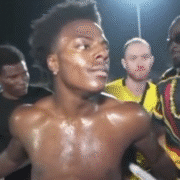
tekashi

Tekashi 6ix9ine Asks DJ Vlad Which Interviewee Smelled the Worst

Interviews seem simple, right? You sit down, ask questions, get answers. But anyone who’s conducted a few will tell you — some conversations are gold, some are frustrating… and some are unforgettable for reasons you wouldn’t expect.

Enter Tekashi 6ix9ine, the man known for chaos, energy, and saying exactly what’s on his mind, sitting down with DJ Vlad, the legend of hip-hop interviews. And the topic? Not who was the most famous, not who went viral, but… who smelled the worst.

[Sound effect: record scratch]

Tekashi Gets Curious

TEKASHI 6IX9INE (laughing):
Yo Vlad, for real… outta all the interviews you ever did, who was the best? I ain’t talking most views, I’m talking… the one that really hit different.

DJ VLAD:
Honestly? Your interview is definitely one of them.

TEKASHI:
If it wasn’t me, it wasn’t you.

DJ VLAD:
Nah, for real… Fab Morvan from Milli Vanilli.

[Beat swells slightly — nostalgic]

tekashi

The Milli Vanilli Story

Ah yes, Milli Vanilli — the infamous pop duo that shook the world in the late ’80s and early ’90s. They won Grammys, performed worldwide… and none of it was real.

DJ VLAD:
I interviewed the surviving member, Fab Morvan. It was such a deep story… fame, illusion, and how being caught in the wrong place at the wrong time can destroy you.

TEKASHI:
Yo, that’s wild, bro… like real-life “what the hell happened?”

The scandal reshaped the music industry. Ghost singers? Still around, but now credit is mandatory. Auto-tune? Sure, but you can’t fake the entire voice anymore.

The One That Went Wrong

TEKASHI:
Okay, okay… now tell me this — who was the whackest interview you ever did?

DJ VLAD (sighs):
Lil Wayne. Before VladTV officially existed, I did a DVD press day with him… and bro, he did not want to answer a single question. One-word answers. Practically ignoring me. I left that interview frustrated.

TEKASHI (laughing):
Yo, that’s classic Lil Wayne energy.

The Burning Question

And then came the one question Tekashi had been waiting for:

TEKASHI:
Aight Vlad, straight up… who smelled the worst?

[Beat pause — suspenseful, comedic]

DJ VLAD (laughing nervously):
Man… I don’t get close enough to people like that. Usually, we’re a few feet apart. Honestly? I can’t remember anyone smelling that bad.

TEKASHI:
C’mon, you acting like Lil Wayne right now! Pick someone! Throw dirt on ’em!

DJ VLAD (thinking):
Uh… okay, if I had to pick… Mitch Green. The guy Mike Tyson knocked out years ago. He could barely talk, barely stand… and we had to subtitle the entire interview. English, yes… but nothing he said made sense.

Mitch Green — The Interview No One Will Forget

Mitch Green, folks. The only interview Vlad regretted but still put out. Drugs, chaos, and a voice so slurred it could break transcription software — this was one conversation you wouldn’t forget.

DJ VLAD (laughing):
I wanted to trash it… but I didn’t. Put it out anyway.

[Beat fades — teasing chuckle, playful sound effects]

Lessons From Vlad’s Interviews

From Milli Vanilli’s ghosted vocals to Lil Wayne’s one-word masterpiece to Mitch Green’s unforgettable odor, DJ Vlad’s interviews cover the full spectrum of music industry insanity.

And Tekashi? He just wants the tea — even if it’s about who smells the worst. Because in hip-hop, energy, stories, and yes, even hygiene, all matter.

Conclusion

Whether it’s deep stories, frustrating encounters, or chaotic, unfiltered moments, interviews remain a unique lens into the personalities behind the music. Tekashi’s curiosity, combined with Vlad’s legendary experience, gives fans a front-row seat to the humor, chaos, and unpredictability of the industry.

Sometimes, the best stories aren’t about fame or success — they’re about the moments that make you laugh, cringe, or shake your head in disbelief. And for Tekashi 6ix9ine and DJ Vlad, this conversation had all three.

👉 Stay connected for the latest hip hop and streaming news at The Urban Spotlight Homepage

👉 For more background on Floyd Mayweather’s career and empire, check out his Wikipedia page

29
tee

Tee Grizzley Lets Wack 100 Slide at the Airport — Respect, Awareness, and Modern Street Smarts

Some lessons in the streets aren’t learned online — they’re learned in real time, sometimes in places you least expect. Recently, Tee Grizzley demonstrated this firsthand during a tense encounter with Wack 100 at an airport, showing why experience always outweighs hype in the rap game.


The Airport Drama That Wasn’t Really Drama

It all started with a stalker-type photo. Wack 100 was caught snapping a picture of Tee Grizzley — an image taken from afar, a setup for online chatter and speculation.

Why did it matter? Previously, Wack had spoken on Baby Shooter about an old robbery at Grizzley’s house, reigniting online discussions and rumors. Social media blew up, messages flooded, and fans tried to interpret every move.

But Tee Grizzley? He stayed calm. He didn’t let the photo spark unnecessary drama. He let Wack slide.

Tee’s approach was simple: if someone wants an issue, say it to my face. Don’t hide behind camera lenses. Don’t send pictures and expect fear.

This moment wasn’t just about avoiding conflict — it was about setting boundaries. In a world where every move can be broadcasted, Tee showed that personal integrity and self-control are just as important as street credibility.


Experience Over Hype

This incident highlights a key truth in modern street culture: the internet can’t replace instincts and awareness.

Tee Grizzley knows the difference between genuine threats and online clout chasing. While social media can amplify drama, the principles of respect and situational awareness remain timeless.

“If I see someone in the airport, and they got an issue… I’ll handle it. But don’t send me a picture later. That’s cowardly,” Tee explained.

Experience plays a huge role in moments like this. Many younger rappers might react impulsively to a photo or post, letting an online situation spiral into something dangerous. Tee’s decision to ignore the petty provocation and maintain composure is a masterclass in street intelligence.

tee


The Evolution of the Streets

In today’s world, everything is televised. From DM beefs to viral pictures, the internet has turned every corner of life into potential drama. Social media allows fans, influencers, and even rivals to create tension without ever showing up in person.

But the rules of the streets still apply:

  • Respect the lane. Know your space and boundaries.

  • Stay aware. Situational awareness is life-saving.

  • Know who is a real threat. Not every camera flash or comment warrants a reaction.

Tee’s airport encounter is a prime example of modern street smarts: handle what matters in person, and let the rest slide.


Street Wisdom Meets Social Media

Tee Grizzley’s philosophy extends beyond this airport moment. In the age of viral clips, online beefs, and relentless content creation, he reminds us that:

  1. Not every slight deserves attention.
    People will always try to provoke online. Reacting impulsively can escalate conflicts unnecessarily.

  2. Face-to-face is where respect is earned.
    The streets operate differently from Instagram. If there’s an issue, it’s addressed directly — not via photos or comments.

  3. Energy is valuable.
    Every reaction expends mental and emotional energy. Tee focuses on music, family, and business, not petty online disputes.


Letting the Petty Slide

For Tee Grizzley, the encounter wasn’t about confrontation. It was about choosing battles wisely. Even when the internet tried to amplify tension, Tee’s energy remained focused on what counts: his music, his team, and his life.

“Life moves on. Streets move on. Even when drama hits… even when people get reckless online… you let the petty slide… until the time and place is right.”

This philosophy reflects the evolution of street intelligence in the digital age, showing that patience, awareness, and respect still dominate over impulsive reactions.

It’s a lesson for aspiring artists and fans alike. The internet may reward reaction videos, clickbait, and viral posts, but in real life, composure and wisdom are worth far more than likes or views.


Modern Street Rules

Tee’s actions reinforce several timeless truths:

  • Personal safety first. Avoid unnecessary conflicts that could escalate in public.

  • Reputation matters. Even viral photos can tarnish a rapper’s credibility.

  • Influence comes with responsibility. When you’re a public figure, every move is under scrutiny.

In essence, Tee Grizzley showed that being a leader in the streets now requires more than aggression — it demands intelligence.


Conclusion

The story of Tee Grizzley and Wack 100 at the airport is a reminder of one universal street rule:

The internet may amplify everything, but respect, awareness, and patience never go out of style.

For modern rappers and fans alike, this is a lesson in handling conflict, protecting energy, and knowing when to act — and when to simply let it slide.

Tee Grizzley proved that in the age of viral content and social media drama, real wisdom and street experience are irreplaceable.

👉 Stay connected for the latest hip hop and streaming news at The Urban Spotlight Homepage


30
JetBKeezy

Pirus Make Rapper JetBKeezy Apologize in Jail for Dissing the Dead — The Realities of LA Hood Politics

JetBKeezy

In a story that’s as intense as it is cautionary, rapper JetBKeezy found himself forced to apologize while in jail after dissing a deceased individual from rival hoods. The situation sheds light on the harsh realities of LA drill and gang-affiliated rap, where words on a track or social media post can have real-life consequences.

Trap Lore Ross breaks down the sequence of events, from the notorious “Greasy Neck Tour” incidents to the phone call where JetBKeezy publicly apologized — a moment that highlighted the fine line between music, reputation, and survival in Los Angeles.


The Incident That Sparked It All

JetBKeezy’s history is complicated. From high-profile robberies like taking Heimbezy’s chains to escalating hood beefs, he’s no stranger to controversy.

It all escalated after he released a diss track targeting the Westside Pirus, specifically calling out individuals who were either affiliated with or connected to deceased rivals.

According to insiders, JetBKeezy even got kidnapped weeks prior over prior disputes, zip-tied, and had his car taken — all caught on video.

Though the physical altercations were shocking, the public apology in jail brought a new level of accountability to his actions.


The Apology in Jail — Real Consequences

While on a phone call from jail, JetBKeezy was confronted and guided by older, established Pirus members to make amends.

The message was clear:

“Say it like you mean it… don’t play around.”

Even behind bars, the hierarchy and rules of the streets still apply. The apology was not just symbolic — it was survival.

Trap Lore Ross explains:

“When you hit these dorms, you are literally living with your enemies. Every day is unpredictable. One wrong word, one diss track too many… it can catch up to you.”

The moment reflects a sobering truth about LA rap culture: respect, family ties, and understanding the politics of the streets often outweigh music career ambitions.


The Complexity of LA Drill & Gang Rap

Unlike other regions, where rap beefs might target individuals, LA drill often involves entire neighborhoods or sets.

JetBKeezy’s diss was interpreted as disrespecting a whole hood — including deceased members — which amplified the backlash.

Trap Lore Ross highlights:

“In LA, if you’re not smart about who you diss, it can literally touch you anywhere. You’re not just beefing with a rapper — you’re beefing with the set, the family, the community.”

This system of accountability extends beyond the music. Young rappers, no matter their talent or audience, must navigate entitlement, envy, and the street politics of their origins.


Music, Respect, and Survival

The story of JetBKeezy is a cautionary tale. Diss tracks, viral social media posts, and public bravado are part of the culture — but when real-life gang affiliations intersect with fame, the stakes are deadly.

Trap Lore Ross advises:

“If you’re not really from the hood or don’t have family to back you up, don’t rap like that. One wrong move and the streets will remind you where you stand.”

For JetBKeezy, the apology was a necessary step to prevent escalation and survive. It was a raw reminder of how intertwined LA rap and street credibility are, and how quickly entertainment can become life-threatening.


Lessons From the Streets

This incident illustrates broader truths about LA gang-influenced rap:

  • Diss tracks carry consequences beyond the studio.

  • Entire hoods or sets may respond to perceived disrespect.

  • Survival requires strategy, guidance, and respect for established rules.

  • Fame does not exempt rappers from the realities of their communities.

For fans and aspiring artists, JetBKeezy’s experience is a vivid example of why street awareness and cultural understanding are critical in LA’s music scene.


Conclusion

The story of JetBKeezy being made to apologize in jail is a stark reminder of the real-world stakes behind the music. In LA, words aren’t just lyrics — they’re declarations that can carry consequences, both inside and outside prison walls.

It’s more than rap drama. It’s about survival, respect, and navigating a system that blends entertainment with street politics.

For JetBKeezy, the lesson is clear: in LA, you rap smart, or you pay the price.

👉 Stay connected for the latest hip hop and streaming news at The Urban Spotlight Homepage


27
blueface

I Spent the Day with Blueface and 10 Wild Video Girls — The Craziest Behind-the-Scenes Experience of 2025

blueface

In one of the wildest, most unpredictable days in modern hip-hop content, Blueface delivered a full-spectrum experience of chaos, comedy, culture, and raw honesty during a behind-the-scenes video shoot — all while surrounded by ten of the loudest, wildest, most unfiltered video girls you can imagine.

What started as a simple day of filming turned into a rollercoaster of hood politics, career reflection, family struggles, and pure, uncut Blueface energy.
This wasn’t just a vlog.
It was a cultural deep dive into the world of an artist who has lived ten lifetimes before turning 30.


The Shock Factor

From the moment Blueface walked into the room, the atmosphere shifted.

No warm-up.
No easing into it.
Just straight into Blueface-mode — confident, playful, defensive, and unapologetically himself.

When that infamous freestyle came up — the one that reignited old hood tensions — Blueface didn’t dodge anything. He delivered one of the calmest, coldest lines of the day:

“We ain’t just start beefin’ yesterday.”

It set the tone instantly.
The room tightened. The cameras leaned in.
This wasn’t going to be one of those sanitized influencer-friendly shoots.
This was real.

And just when things got serious, the conversation shifted to age and longevity — and Blueface made it clear he isn’t slowing down anytime soon:

“I’m in my prime right now. I’m still a Yian.”

At 28, the man still moves like he’s fresh out the house every day.


Inside the Video Shoot — A Circus of Pure Entertainment

The moment we entered the video shoot location, it was like stepping into organized chaos.

Makeup bags exploded across the floor.
Wigs, outfits, heels, lip gloss, and ring lights everywhere.
Ten video girls creating a noise level that could wake up the ancestors.

Someone yelled:

“Hold on, I need a gallon!”

Another screamed:

“Blue doing an outfit change — EVERYBODY RELAX!”

The place was a mix of a rap video, backstage WWE, and a beauty supply store that got hit by a tornado.

Everywhere you turned:
dancing… yelling… joking… arguing… stretching… twerking… hydration breaks… questionable conversations about men and their “attributes.”

It was entertainment at its purest form.

And then — out of nowhere — a shoe-cleaning hustler slid into the scene like he spawned from a video game.
His pitch?

“I’ve been on the road like toilet paper. You sprayed the spray, you never remember the day the stain went away!”

He cleaned an entire sneaker before anyone could blink.

Then walked out like Batman:

“Don’t tell nobody I scrubbed your shoe tomorrow.”

A highlight moment.


Blueface Gets Real — A Rare Glimpse Beyond the Persona

As the noise settled, Adam22 walked in.
Blue gave him a hug, and suddenly the comedic energy shifted into something more grounded.

They spoke about jail.
The weight of doing two years.
The social media pressure when you’re known everywhere, but still tied to where you come from.
Tattoos.
LA culture.
Responsibility.
Growth.

And then the conversation hit the heaviest point of the day.

Blue talked about his father — a man who’d spent 30 years in the system.

He revealed the emotional and financial toll of trying to support him:

Over $1.3 million spent on travel, lawyers, hearings, and fighting a losing system.

You could hear the fatigue in Blueface’s voice — but also the love.
That moment froze the entire room.
Even the ten video girls — who had been laughing and shouting all day — fell silent.

It was raw.
Human.
Real.


The Work Ethic Behind the Madness

Despite all the chaos, Blueface was locked in.

Within one day, he recorded a new track, planned a collab tape with DDG, discussed upcoming tours, talked about a potential boxing match with Swaggy P, and mapped out new shows with Zeus.

He lives in constant motion — chaotic but productive, scattered but focused.

By the end of the night, we were already shooting the music video for the song he had just recorded hours earlier.

Blueface works like a man running out of time — nonstop energy, nonstop ideas, nonstop movement.


Social Media Eruption

Clips from the shoot began circulating before we even wrapped the day.

Fans flooded social media calling the environment:

  • “The most Blueface day ever.”

  • “A comedy and a documentary at the same time.”

  • “A real look into the madness behind the music.”

TikTok, Instagram, and YouTube shorts were flooded with behind-the-scenes moments:
the shoe cleaner, the girls, the freestyle discussion, the jail talk, the chaos, the honesty.

It became an instant viral moment — the perfect blend of mess, music, and vulnerability.


A Cultural Bridge

This day was more than content.

It was a rare look into the multiple worlds Blueface balances:

  • the entertainer

  • the gang-affiliated figure with a past that follows him

  • the father and son with real family burdens

  • the workhorse pushing out content at lightning speed

  • the creator surrounded by chaos but driven by purpose

It was the merging of ego, humor, trauma, creativity, and unpredictability — the full Blueface experience.


Conclusion

Spending the day with Blueface and ten wild video girls wasn’t just entertainment — it was an inside look at the life of a man living at the intersection of fame, controversy, and ambition.

From chaotic jokes to emotional confessions, from twerking mid-interview to million-dollar family responsibilities, this day had everything.

One thing is certain:

You can’t script a day with Blueface.
You can only survive it — barely.

👉 Stay connected for the latest hip hop and streaming news at The Urban Spotlight Homepage

👉 For more background on Floyd Mayweather’s career and empire, check out his Wikipedia page

28

Wes Watson Ignites Chaos After Calling MMA Fighters “Squares” — The Street vs The Sport Debate

wes


In another internet-shaking moment of raw talk and controversy, Wes Watson has once again found himself at the center of a social media firestorm — this time, for calling MMA fighters “squares.”

The former inmate turned motivational firebrand, known for his no-filter delivery and street-warrior philosophy, stirred up a heated debate after claiming that mixed martial artists are “just athletes playing a game,” while he comes from a world where “violence isn’t sport — it’s survival.”

And just like that, the MMA community came swinging.


The Spark That Lit the Fire

It all began when Wes made a now-viral statement during a podcast appearance:

“MMA fighters are squares. They train for sport, I fought for my life.”

Within hours, clips hit TikTok, X, and YouTube — and fighters across the UFC roster weren’t having it.

UFC welterweight Kevin Holland was among the first to clap back, challenging Wes to “step in the cage.”

But Wes, being Wes, didn’t flinch:

“Bro, I’m not a fighter. If you whoop my ass… you better run.”

In true Watson fashion, he doubled down on his stance that “real violence” doesn’t happen under bright lights and sponsorship banners — it happens when there are no rules, no referees, and no second chances.


Wes Watson’s Street Code Philosophy

For Wes, fighting has never been about belts or octagons — it’s about energy, survival, and dominance.

“I’ve been around real violent people,” he said. “The toughest guys I know didn’t learn violence in a gym — they lived it.”

That line alone went viral, sparking thousands of reaction videos and heated comment threads.

To him, training in a controlled environment doesn’t make someone dangerous — living through chaos does.


MMA Fighters Clap Back

But the fighters weren’t staying quiet.

Gordon Ryan, one of the greatest jiu-jitsu grapplers of all time, mocked Wes online:

“Imagine living this delusion. The people you’re talking about could make sweet love to you and you couldn’t do a thing about it.”

Wes fired back instantly, accusing the MMA world of being soft and disconnected:

“Why does he wanna make sweet love to me? That’s a crazy statement.”
“I grew up in San Diego by the border. I did time with the Mexican Mafia and Southsiders. You don’t know what you’re talking about.”

Then came Dean Lister, another UFC veteran, who added fuel to the fire by calling Wes “an embarrassment to San Diego.”

Wes clapped back — hard.

“He messaged me apologizing. None of these dudes make money. Connor’s the only one. The rest? Broke. Half brain-dead.”

wes


The Internet Reacts

It didn’t take long for the drama to explode online.

Fans flooded the comment sections, split right down the middle:
Some sided with Wes — calling him “real” for defending street survival over sport.
Others dragged him for arrogance and delusion, saying that professional fighters train daily to master what he only talks about.

YouTube and TikTok channels jumped in too — dissecting every quote, every threat, and every meme-worthy line.

“Don’t whoop my ass,” one fan joked, quoting Wes’s viral clip. “That’s my new life motto.”


Street vs. Sport — The Bigger Debate

Beyond the back-and-forth, this controversy opened a deeper discussion — what really defines toughness?

Is it the discipline of a professional fighter who trains for years under strict rules and physical limits?
Or is it the raw survival instinct of someone who’s lived through real violence?

Wes insists that fighters are “squares” for needing structure — while fighters argue that true control and skill come from training, not chaos.

Either way, the “street vs sport” debate has officially gone mainstream.


Wes Watson’s Final Word

In true Watson fashion, he closed out his rants with one last warning:

“I’m gonna say a lot of [bleep]. If you don’t like it — get the [bleep] out of here.”

He clarified that he doesn’t hate fighters — only the ones trying to “prove something” to people who don’t even want to fight.

“Real violence doesn’t happen in octagons,” he said. “It happens outside — no refs, no rules, no cameras.”

Love him or hate him, Wes Watson knows how to keep the internet talking — and this might be one of his wildest feuds yet.


A Clash of Worlds

At its core, this isn’t just a beef between one man and a sport.
It’s a cultural clash between two mentalities — one defined by structure, skill, and sport… the other by chaos, experience, and survival.

Whether you see him as delusional or brutally honest, Wes Watson has once again forced the internet to ask one uncomfortable question:

What’s more real — the fight in the cage or the one on the street?

👉 Stay connected for the latest hip hop and streaming news at The Urban Spotlight Homepage

👉 For more background on Floyd Mayweather’s career and empire, check out his Wikipedia page

tekashi

Adam Asks 6ix9ine Why He Joined the Bloods in 2017

When it comes to stories where street life meets hip-hop, few are as infamous — or misunderstood — as 6ix9ine’s connection to the Nine Trey Bloods in 2017.

In a recent sit-down with Adam22, the rapper finally opened up about how it all went down — and the story is more complicated than most headlines suggest. It’s not just clout or tough-guy image; it’s about family, survival, and the chaos of the streets.


The Summer of 2017: Stress, Family, and Career Pressure

The summer of 2017 was a high-pressure moment for 6ix9ine. His mother was sick, his personal life was in turmoil, and his music career was at a crossroads.

Feeling desperate, he reached out to Solomon Sounds on Instagram, hoping to get a second chance in the industry. Solomon responded immediately:

“Yo, meet me at Starbucks in Soho right now.”

6ix9ine left Belleview Hospital, where his mom was receiving care, and walked roughly 40 blocks to Soho, navigating the city streets with Tribe, Drew, and Linda by his side. Imagine juggling family stress, career anxiety, and walking through Manhattan — all in one day.

That moment set the stage for what was about to come.


The Introduction to Chris Heigore and Management Deals

Once at Starbucks, Solomon’s best friend, Chris Heigore, stepped in. He took 6ix9ine’s number, talked business, and signed him to a management deal. Suddenly, 6ix9ine’s music grind had structure — studio sessions, video shoots, and networking.

Every studio session booked by Chris had Seiko Billy present. On the first day of the “Gumbo” video shoot, Seiko Billy introduced 6ix9ine to Shotti, a Nine Trey Bloods member. That was 6ix9ine’s first real gang connection.

But 6ix9ine stresses something critical: being around gang members didn’t automatically make him “tough.”


The Risk Factor: Life in the Streets vs. Safety

Adam asked the question everyone wanted answered:

“Did you know what you were getting into?”

6ix9ine admitted that he did — but he also explained the mindset. He could have stayed safe, invested in full-time security, or avoided the streets entirely. But that would have been boring to him. He thrived on movement, energy, and the adrenaline of street life.

“If I had played it safe, I wouldn’t be the 6ix9ine you know today,” he said.

This wasn’t about clout or image. It was about testing himself, staying active, and moving in a world where danger was part of the deal.


The Struggles Behind the Gang Life

6ix9ine also painted a reality check: most gang members aren’t living luxurious lifestyles. Many were sleeping on rugs, struggling to survive, and barely making ends meet.

“Being in a gang doesn’t make you rich or untouchable,” he said.

It’s the connections and momentum — the network, reputation, and access to opportunity — that pull people in. And for a young rapper trying to break into the industry, that network can sometimes be the difference between obscurity and fame.


The Cost of Being Involved

He was transparent about the risks: being connected to the Nine Trey Bloods brought legal trouble, close calls, and heightened attention from law enforcement. It wasn’t glamorous — it was survival in high-stakes conditions.

For fans watching, this conversation offered a rare behind-the-scenes look into why 6ix9ine made the choices he did. It wasn’t about flexing or “looking scary.” It was opportunity, risk, and navigating the streets while chasing music dreams.

Adam and 6ix9ine both emphasized the takeaway: joining a gang is complicated, dangerous, and far from a shortcut to respect. It’s a gamble — one that can shape your life forever.


Family and Loyalty in the Mix

6ix9ine also spoke about family loyalty, saying his choices were influenced by his mom’s health and the desire to provide for her. Every decision — from walking through the city to getting into studio sessions with gang-affiliated associates — was weighed against personal stakes.

“I had to move fast, do my thing, and keep my family in mind,” he said.

This context makes the story more human than headlines often portray. It’s not just about street cred or violence; it’s about a young man juggling music ambitions with personal responsibility under pressure.


Conclusion: Survival, Streets, and Music

The story of 6ix9ine and the Nine Trey Bloods in 2017 is a cautionary tale and a history lesson rolled into one. From family pressure to street connections, from studio deals to risky associations, it’s a chapter that shaped the rapper we know today.

Adam and 6ix9ine’s conversation shows that behind every viral story is a human reality — choices made under pressure, calculated risks, and the constant tension between survival and ambition.

For fans and followers of hip-hop culture, it’s a reminder that street stories often have layers most people never see, and that even the wildest headlines often start with very human motivations.

👉 Stay connected for the latest hip hop and streaming news at The Urban Spotlight Homepage

👉 For more background on Floyd Mayweather’s career and empire, check out his Wikipedia page

25
tekashi

6ix9ine vs. the Hip-Hop Industry: Blackballed, Back, and Unstoppable

6ix9ine

6ix9ine. One of the most polarizing figures in modern hip-hop. A man who changed the game with his music… and shook it with his actions. But what happens when the entire industry turns against you?
Trap Lore Ross and 6ix9ine break it all down.

Sound effects: crowd murmurs, faint studio music, camera clicks.


The Industry Turns

Looking back, 6ix9ine says it seems almost unreal. The hip-hop world — from underground scenes to corporate executives — united to put him in the so-called “snitch box.”
It wasn’t just critics. It wasn’t just fans. Everyone from labels to radio stations treated him like a liability.

🎵 [Beat intensifies, adds tension]


The Threat of the Uncontrollable

6ix9ine explains:

“It’s not that everyone was a gangster. It’s that nobody could control me.”

Hits, charisma, viral content — he couldn’t be managed. And when he exposed Billboard chart manipulations or challenged streaming systems, execs panicked. Suddenly, he wasn’t just polarizing. He was a threat to the industry’s status quo.

Sound effects: typewriter, camera shutters.

The “Illuminati of music” — Apple, Spotify, Billboard, Nielsen, radio heads — seemingly coordinated to blackball him, cutting him off from opportunities, spins, and promotion.

🎶 [Beat slows slightly, suspenseful]


Selective Hypocrisy

The hypocrisy was glaring. Other rappers faced snitching allegations. Videos and court records existed. And yet, the industry didn’t react.
But when it came to 6ix9ine, the response was swift, unified, and public.

Sound effect: gavel hits, echoing.

Trap Lore Ross draws the parallel:

“It’s like politics. Think Trump after January 6 — loved or hated, he was a threat the establishment couldn’t ignore. 6ix9ine was the same in hip-hop.”

🎵 [Beat picks up, tension builds]


The Long Wait for Validation

Even Vlad TV avoided interviewing him in 2020. Executives and media outlets weren’t ready to hear him expose industry contradictions.
When he finally sat down with DJ Vlad years later, it became one of the most talked-about interviews of the year, showcasing not just 6ix9ine’s persistence, but his understanding of narrative control.

Sound effect: studio ambient noise, faint mic clicks.

6ix9ine’s approach wasn’t defensive. He controlled the conversation, dismantling myths, contradictions, and industry excuses. From Breakfast Club to Vlad TV, he systematically exposed the selective rules of hip-hop.

🎶 [Beat softens, reflective tone]


A Double Standard in Hip-Hop

The industry’s rules are selective:

  • Gunna cooperates and keeps releasing hits.

  • Lil Baby continues his rise without scrutiny.

  • Fans forgive certain artists, yet 6ix9ine is treated as the ultimate example.

“I didn’t tell on my friends. I put people on who were in critical condition. Yet I was made an example.” – 6ix9ine

Sound effects: murmurs of fans, faint applause.

By 2025, public perception started shifting. Loyalty, hypocrisy, and the rules around “snitching” became selective. The streets and fans began realizing the narrative wasn’t absolute.


The Return

6ix9ine’s comeback demonstrates the power of persistence, timing, and charisma. He returned to the industry, viral platforms, and streaming charts on his terms, showing that even when blackballed, influence and talent find a way back.

🎵 [Beat crescendos, dramatic]

Trap Lore Ross reflects:

“6ix9ine’s story isn’t just a rap drama. It’s a case study in influence, control, and the business of reputation in hip-hop.”

Sound effect: echo fades, beat slows to a lingering note.


Why This Story Matters

This isn’t just about snitching or controversy. It’s about:

  1. Influence and control: How an industry reacts to the unmanageable.

  2. Narrative power: How persistence and boldness can rewrite public perception.

  3. Hypocrisy in selective enforcement: Why some artists are punished while others thrive.

Even in a world determined to silence him, 6ix9ine reclaimed his voice, turning controversy into leverage and criticism into content.


Conclusion: Lessons from 6ix9ine

From blackballed to unstoppable, 6ix9ine’s journey reflects the contradictions of hip-hop itself: selective, polarizing, and relentlessly competitive.

  • Fame doesn’t protect you.

  • Influence can intimidate even the largest corporations.

  • Persistence, strategy, and charisma matter more than approval.

Sound effect: echoing fade, subtle beat lingering.

Whether you love him, hate him, or just observe… 6ix9ine’s story is a cautionary tale, a masterclass in control, and proof that even in a world determined to cancel you, the right moves can win.

👉 Stay connected for the latest hip hop and streaming news at The Urban Spotlight Homepage

👉 For more background on Floyd Mayweather’s career and empire, check out his Wikipedia page

26
diddy

Diddy Behind Bars: Fort Dix, Federal Prison Life, and the Stories Everyone’s Talking About

diddy

Diddy is behind bars. Yes, the high-profile rapper is serving time… but not just anywhere.
He’s doing his sentence at Fort Dix, or as the streets jokingly call it… “Fort Dicks.” And as wild as that nickname sounds, the story behind it is even crazier.

Sound effects: prison gates clanging, faint chatter of inmates.


The Arrest and Conviction

Trap Lore Ross breaks it down. Diddy’s conviction wasn’t for violent crime. Not for drug trafficking. Instead, it involved a case with hiring male prostitutes — something the public found shocking, given his high-profile persona and decades of celebrity influence.

Many assumed Diddy might walk free. Yet the courts handed him a sentence that sent him to federal prison, setting off a storm of speculation across social media.


MDC Brooklyn: The Starting Point

Before arriving at Fort Dix, Diddy was held at MDC Brooklyn, a federal facility where inmates await sentencing. Prison life is unpredictable and dangerous. Allegedly, one night, Diddy woke up with a knife at his throat.

Sound effects: knife sound, heartbeat thumping.

This wasn’t just a rumor. The fear was real. Mental health challenges were reportedly involved, but the incident highlighted how even high-profile inmates can face real danger inside the system.

This event triggered a prison transfer to Fort Dix, a facility known to be more relaxed — often nicknamed “club fed.” Unlike harsher penitentiaries, Fort Dix is described as open housing with less tension, allowing inmates to serve their sentences in relative peace.


Fort Dix: Life Behind Bars, With a Twist

Trap Lore Ross explains the absurdity of Fort Dix: a place with baby oil jokes, pop culture references, and an unusually relaxed atmosphere compared to other federal facilities.

Diddy wasn’t alone. Other inmates, like Sebastian Tail Fair, sentenced for probation violations, were there too. Imagine the interactions — navigating prison life as celebrities and high-profile figures with vastly different backgrounds.

Sound effects: prison doors sliding, faint chatter.

Rumors circulated that Diddy was teaching “business classes” inside the prison, sharing his wealth-building knowledge with fellow inmates. Game with Diddy, some called it. However, when Trap Lore Ross checked in, even 6ix9ine clarified it wasn’t exactly accurate.

Fact or fiction, the story reinforces Diddy’s legendary aura: even behind bars, he’s larger than life.


The Legal Angle

The question everyone asks: was Diddy getting more time than he deserved? Some fans believe yes, but legal experts note that the courts often weigh factors the public doesn’t see.

Trap Lore Ross points out: judges have discretion during sentencing, and Diddy’s case involved serious details proven in court — factors that likely influenced his prison term.

Sound effect: gavel hitting, echoing.

Appeals? Statistically, success is rare. Only about 2% of federal appeals result in reduced sentences. Diddy, with all his resources, could try — but the odds aren’t in his favor.

This is a harsh reality for high-profile rappers behind bars. Names like TK, Kasanova, Tax Stone, and now Diddy, highlight that even fame and money can’t guarantee leniency once the system has spoken.


High-Profile Prison Life

Life inside Fort Dix is still life in prison. But Diddy’s experience adds layers of public fascination:

  • A celebrity navigating a federal facility.

  • Rumors of classes, mentorship, and social interactions among inmates.

  • Contrasts between MDC Brooklyn danger and Fort Dix’s comparatively “relaxed” environment.

Trap Lore Ross reflects on the absurdity:

“Fort Dix is a strange mix of chaos and calm. You’ve got serious convicts, high-profile inmates, and then all the pop culture that follows them. It’s surreal.”


The Streets React

As news of Diddy’s imprisonment spread, social media exploded:

  • Fans joked about “Fort Dicks”.

  • Memes circulated about celebrity prison life.

  • Others debated the fairness of the justice system.

Trap Lore Ross notes that public perception often mixes fact with exaggeration, especially when it comes to hip-hop stars behind bars. But the reality? Even legends can’t escape the structure and risks of the federal system.

Sound effect: prison yard ambience, distant chatter.


Lessons in High-Profile Incarceration

Diddy’s time in Fort Dix is more than just headlines. It’s a study in contrast:

  • High-profile celebrity life vs. federal prison rules

  • Public image vs. private survival

  • Legendary influence vs. real-world vulnerability

Even with privileges like better housing, notoriety doesn’t protect against the dangers and unpredictability of incarceration.

“Behind the jokes and memes is reality. Prison is humbling, no matter who you are.” – Trap Lore Ross


Why The Story Matters

Diddy’s story resonates for several reasons:

  1. Cultural fascination: Fans want to see how celebrities live behind bars.

  2. Legal intrigue: Questions about fairness, sentencing, and federal discretion.

  3. Reality check: Fame and money don’t insulate against consequences.

Even in a relaxed facility like Fort Dix, every interaction, rumor, and day counts.


Conclusion: Chaos, Caution, and Curiosity

Fort Dix may be more relaxed than other federal prisons, but the stakes are real. Behind every joke, every nickname, every viral post, lies the reality of federal incarceration.

Diddy’s story is a cautionary tale for artists, fans, and the public:

  • Even the highest of highs can lead to unexpected lows.

  • Life behind bars is unpredictable, dangerous, and often misunderstood.

  • Legacy is complicated: managing fame and reputation doesn’t end at the prison gates.

Whether you love him, question him, or just watch in disbelief… Diddy’s journey in prison is stranger than fiction, but undeniably real.

👉 Stay connected for the latest hip hop and streaming news at The Urban Spotlight Homepage


29
blueface

Blueface Out of Prison: Chaos, Court Battles, and Viral Moments From Day One

out

Blueface is out of prison… but don’t think the story ends there.
From attempted murder charges to viral moments the second he hit the streets, the saga of Blueface is a rollercoaster you can’t turn away from.

Sound effects: phone notifications, camera clicks, court gavel hits.


The Streets Were Ready

As soon as Blueface stepped out of prison, the world noticed.
Wack100 breaks it down — Blueface served 22 months behind bars, with multiple cases stacked against him. While his official release date was slated for July 2024, early release brought him home in March or April, and the streets immediately went wild.

By 11:30 a.m., Blueface was already viral. Not because of hype, but because trouble seems to follow him like a shadow.

“Blueface does things his way. No apologies. No bending. No fear.” – Wack100

Fans were already buzzing on social media. Clips of Blueface stepping out, interacting with supporters, and joking with cameras spread across Instagram, TikTok, and Twitter in a matter of minutes. The narrative was clear: Blueface isn’t just back — he’s back on his own terms.


The Legal Drama Behind the Headlines

Blueface’s legal troubles read like a movie script.

Back in Las Vegas, October 2022, Blueface was involved in a shooting outside a strip club, facing 2.5 years on an attempted murder charge. The news hit Wack100 like a punch to the chest.

Sound effects: car engine revving, phone buzzing.

Without hesitation, Wack100 threw on sweats, hit the freeway, and mobilized attorneys at 6:30 a.m. While bail seemed impossible, sheer determination secured house arrest for Blueface, keeping him out of the harshest consequences.

“This was a narrow escape — a brush with real danger that could have changed everything.” – Narrator

Even after this victory, challenges piled up. Joint probation suspensions meant that any contact with law enforcement could land him back in prison. And then came the infamous Vegas incident with Cishan: a phone valued over $700 taken during a club fight nearly turned into a felony. Wack100 got it reduced to a misdemeanor, keeping Blueface on the streets — at least temporarily.


California Chaos Continues

Even with legal wins, Blueface’s run-ins didn’t stop.

  • Freeway shootings

  • Two gun-related cases

  • Another assault

Despite this, he kept living life on his terms. Wack100 emphasizes that while the law tried to control him, Blueface moved exactly how he wanted — bold, unapologetic, relentless.

Sound effects: sirens fade in, heartbeat thumping lightly.

“By 8:30 a.m., we picked him up. By 11:30, he was already viral. Not because we made it happen — the streets were ready for him.” – Wack100

This wasn’t just a release — it was a cinematic return to a world that thrives on drama, reputation, and street credibility.


Viral From the Moment He Steps Out

Every viral clip, fight, or court appearance is part of Blueface’s story. His persona is contested, controversial, and captivating. From dodging serious charges to staying one step ahead of the law, he’s created a brand around unpredictability.

Social media exploded with reactions:

  • Some fans celebrated his freedom and charismatic return.

  • Others criticized his reckless behavior, pointing to his continued clashes with the law.

  • Analysts on hip-hop blogs debated whether Blueface’s antics are strategic, chaotic branding, or just plain recklessness.

Even with legal victories, Wack100 notes: Blueface is far from out of the woods. Six months in county time, possible release in 90 days… yet he ended up in Lancaster State Prison due to programming conflicts and probation violations.

Sound effects: gavel hits, echoes fading.

“Blueface’s life isn’t a straight path. The system doesn’t allow it. He moves like water — always finding a way forward, even when the rules try to trap him.” – Narrator


Life on Probation: Walking a Tightrope

Being out of prison doesn’t mean freedom is absolute. Probation for someone like Blueface is high-stakes:

  • One false move

  • One altercation

  • One missed meeting

… and it could send him back behind bars for years.

“Every step he takes, he’s aware of the consequences,” Wack100 says. “But that awareness doesn’t slow him down. It sharpens him.”

For Blueface, every appearance, every freestyle, every clip on social media becomes a calculated risk — a way to stay relevant without losing control.


The Streets vs. The Spotlight

Blueface’s journey highlights a larger truth in hip-hop culture today: the intersection of street credibility and digital virality is a delicate balance.

Every fight, viral clip, or controversial move is amplified online. Fans, haters, and media outlets alike watch and react, sometimes in real-time. For Blueface, it’s not just about attention — it’s survival, reputation, and legacy.

“By the time he hits social media, the narrative is already written. Whether it’s good, bad, or wild, the streets decide if it sticks,” – Wack100


Chaos as a Strategy

Some call it recklessness. Others call it strategy. Blueface has turned chaos into currency:

  • Viral freestyles

  • Bold public appearances

  • Legal battles that dominate headlines

All of these contribute to his persona: the rapper who never plays by the rules, yet always stays one step ahead.

Sound effects: sirens fade, camera shutters clicking rapidly.

“From the streets to the internet, he’s controlling his narrative the best way he knows how — chaos included.” – Narrator


Why The World Watches

Blueface proves that in today’s hip-hop landscape, you can’t ignore the drama:

  • Every court date becomes content.

  • Every viral clip builds brand awareness.

  • Every controversy feeds into the story of who he is.

Fans, critics, and journalists alike watch, analyze, and comment — all while Blueface continues moving, unapologetically living life his way.


Cultural and Industry Impact

Blueface’s story is more than just entertainment — it’s a lens into how hip-hop, street culture, and digital media intersect:

  • The courts try to impose rules.

  • Social media rewards bold moves.

  • Fans reward authenticity — even if it’s chaotic.

It’s a lesson for artists navigating fame: controlling your story and making strategic chaos can be as powerful as music itself.


Conclusion: Chaos, Fame, and Freedom

Blueface’s saga is a modern cautionary tale and a blueprint for viral persona-building:

  • Fame, freedom, and chaos often walk hand in hand.

  • Every move is scrutinized.

  • Every street corner becomes a stage.

“From attempted murder charges to viral street moments the very day he’s released… Blueface proves one thing:
When you live life his way, chaos isn’t just possible — it’s guaranteed. And the world? Always watching.” – Narrator

👉 Stay connected for the latest hip hop and streaming news at The Urban Spotlight Homepage

👉 For more background on Floyd Mayweather’s career and empire, check out his Wikipedia page

30
tekashi

Tekashi 69 Puts DJ Vlad on Blast With Wild “F*, Marry, Kill” Question**

tekashi

When Tekashi 6ix9ine sits down for an interview, calm and quiet are never on the agenda.
And during his latest appearance on Fax TV, he proved it once again — turning a classic interview into a viral spectacle.

This time, it wasn’t about music.
It wasn’t about beef.
It was about a game — a simple, chaotic, and unforgettable game of “F*, Marry, Kill”** that sent social media into a frenzy.


Vlad Gets Put in the Hot Seat

Tekashi flipped the script, turning the tables on DJ Vlad, the man who usually asks the tough questions.
The rules were simple: three names, three choices. One to marry, one to hook up with, and one to… eliminate.

The list?

  • Lauren London

  • Vanessa Bryant

  • Kayla B (King Von’s sister)

Instantly, Vlad was thrown into uncharted waters.

Narrator: You could almost see Vlad’s soul leave his body.

He tried to reason, to laugh, to skirt the question. But Tekashi wasn’t letting him off easy:

“Come on, Vlad, you gotta answer — no skipping!”


The Choice That Broke the Internet

And Vlad answered.

  • Marry: Lauren London

  • F*:** Kayla B

  • Kill: Vanessa Bryant (reluctantly)

The moment? Pure chaos.

Social media erupted.
Fans laughed.
Others cried foul.
And many simply watched in disbelief, glued to the screen.

Even Vlad acknowledged the awkwardness, apologizing mid-sentence:

“Sorry, Nip… sorry, Kobe…”

Tekashi, of course, reveled in the reaction, pushing Vlad further into uncomfortable comedy territory.


From F*, Marry, Kill to Music Opinions**

The chaos didn’t end there.
Tekashi pivoted to music — asking Vlad his thoughts on Bad Bunny.

Vlad’s response was brutally honest:

“Bad Bunny’s clearly a genius worldwide… but to me? A three out of ten.
If I can’t understand what you’re saying, it’s just noise.”

The internet responded immediately.
Spanish-speaking fans flooded the comments, defending Bad Bunny, roasting Vlad, and turning a single clip into a full-blown debate about music, language, and cultural perception.


Comedy, Controversy, and Unfiltered Vlad

Then came the next wild question:

“If you could eliminate one U.S. state or colony… which one would it be?”

The room froze.
Everyone’s first guess? Guam.

Tekashi quickly reminded Vlad:

“Bro, Guam is your top-viewing audience!”

Vlad backtracked, landing on Idaho instead — explaining he had never been there and wouldn’t notice if it disappeared.

It was messy. It was funny. It was chaotic.
And it was classic Vlad-meets-Tekashi content.


Why This Clip Went Viral

The reason this clip blew up isn’t because Vlad had the perfect answers.
It’s because he was real.

  • He got caught off guard.

  • He stumbled.

  • He reacted in genuine, unfiltered ways.

Every awkward pause, every nervous laugh, every controversial statement amplified the entertainment value — and made it perfect for the internet.

Because when 6ix9ine and DJ Vlad share a mic, it’s not just an interview.
It’s chaos curated for maximum virality.

Fans got a glimpse of Vlad’s personality like never before — unscripted, unpredictable, and undeniably human.


Conclusion: Entertainment Chaos at Its Finest

At the end of the day, moments like this prove why Tekashi 6ix9ine remains one of the most polarizing figures in hip-hop media.
And why DJ Vlad continues to be the king of interviews that balance culture, controversy, and virality.

It’s messy.
It’s hilarious.
And it’s the exact kind of unfiltered content the internet craves.

When you combine Tekashi’s unpredictability with Vlad’s experience behind the camera, the result isn’t just an interview.
It’s entertainment chaos at its finest.

👉 Stay connected for the latest hip hop and streaming news at The Urban Spotlight Homepage

👉 For more background on Floyd Mayweather’s career and empire, check out his Wikipedia page

27

DON’T MISS A BEAT

Be the first to know when our Urban Hotties is released.

We don’t spam! Read our privacy policy for more info.

© Copyright – 2021 The Urban Spotlight –  All Rights Reserved. Privacy Policy   Terms of Service | Find us On